Mostrando entradas con la etiqueta AGORA. Mostrar todas las entradas

martes, 31 de marzo de 2020

Hola a todos y todas

Hace tiempo que no colgaba post porque necesitaba descansar y darme la opción de tener otras perspectivas pero lamentablemente, surgió el coronavirus y mis expectativas se truncaron.

Sin embargo,  creo que todo lo malo que está ocurriendo nos tiene que servir para aprender y ser mejores. 

En la vida, cada vez que el humano se ha excedido o ha dejado de estar en sintonía con el medio, ha surgido una queja por parte del Mundo para ponernos a todos en nuestro sitio.  Aunque pensar en todas las personas que han fallecido, todas las personas que están afrontando la enfermedad y padeciendola y todos esos colectivos, que gracias a ellos, los demás sobrevivimos, creo que es una queja o un castigo  excesivo.

En cualquier caso creo que debemos pensar y recapacitar, sin olvidar que la vida es fuerte y nosotros muy frágiles. 
Que valorar y respetar es parte o debería ser parte, de nuestros valores. "Valores" una palabra en desuso.
Es difícil pero quizás esta sea una oportunidad para dar un paso atrás y volver a empezar con otra base moral, la cual hemos perdido.

Solo deseo, de corazón , que todas aquellas personas que están sufriendo la enfermedad se curen y no padezcan.
Solo deseo que aquellas personas o colectivos que nos ayudan sobrevivan y les recompensen.
Solo deseo que los que estamos en casa recapacitemos y pensemos que la vida se puede ir en cualquier momento de la manera mas inesperada.
Solo deseo que las personas vuelvan a ser personas y creo que este es un buen momento para empezar.

Animo.

viernes, 27 de diciembre de 2019

Las mujeres que están cambiando Iran


Todo empezó con una grabación de video que hizo Reihane con unos amigos. La canción era Happy de Pharrell Williams y ella iba vestida con una camiseta pañuelo que dejaba ver algo de su cabello y labios pintados. EL motivo era hacer una grabación el día Mundial de la Felicidad y demostrar que las nuevas generaciones iraníes eran divertidas y actuales. Por todo ello, fue condenada a un año de prisión.

Ella trabaja como desarrolladora de marketing de internet y piensa que las redes hacen mucho para visibilizar y ayudar a que las mujeres de irán tengan contacto con el mundo exterior. Ella tiene su propia empresa y antes le era mucho más difícil ofrecer sus servicios con lo que los cambios se están produciendo poco a poco. Estos pequeños cambios fueron a raíz de la victoria de la Revolución Islámica en 1979.

Cada vez más mujeres se quitan el hiyab en público, que es obligatorio en Irán. Por ello, podían ser castigadas con cárcel, latigazos, etc..  pero en 2018 un nuevo movimiento floreció. Un grupo de mujeres jóvenes se quitaron el hiyad en plena luz del día en Teherán. Este grupo es conocido con el nombre de las mujeres de la avenida Enquelab. Las acciones de protesta son registrados en videos que se difunden por  las redes sociales pero eso no quita que se sigan castigando estas acciones aunque los ciudadanos intentan protegerlas, algo que no ocurría antes.

Lo más importante es que las mujeres , pese a tener las leyes en contra, están ejerciendo una mayor presión frente al régimen para impulsar los cambios.  Uno de esos sacrificios se lo llevó Shirin Ebadi premio Nobel que fue expulsada del país junto con muchas otras mujeres pero gracias a ella, muchas otras mujeres tuvieron acceso a la educación y la cifra de universitarias se disparó. Esa llegada masiva a las aulas hizo que hubiera una creciente incorporación al mercado laboral.
En la actualidad, solo 17 escaños de los 290 del Parlamento iraní están ocupados por mujeres. Son pocas, pero más que hace 60 años y eso es el dato positivo aunque al ser una cantidad pequeña hace que muchas de las reformas sociales no vean la luz.

Irán todavía es una sociedad patriarcal y el sector más radical señala que una mayor participación pública de la mujer va en contra de los valores familiares en Irán y es una de las causas de la disminución de matrimonios y del incremento de divorcios.
Como en todas las sociedades los logros son pequeños pero son avances y ese es el punto de partida para continuar andando hacia la libertad y la igualdad.

Sara tiene 37 años es divorciada y trabaja en una agencia de publicidad. Tras su divorcio volvió a la casa de sus padres donde vive bajo el control de su familia. Su vida, aunque es económicamente independiente, no es diferente a cualquier otra mujer divorciada que puede ser vista como una prostituta. “Odio tener que llevar este trapo en la cabeza”, dice.
Shamin de 20 años es estudiante de informática y sueña con salir del país y ver mundo. Quiere ser dueña de sus propias decisiones. “Para los europeos, Irán es exótico, pero para nosotros es justo al revés”, dice. “A veces nos quitamos el velo durante un rato, cuando vemos que es posible. La presión no es tan grande como antes. Alguna vez nos han llamado la atención, pero no ha pasado nada”, explica.

Mona tiene 32 años es intérprete y guía turística. Ella ha rechazado casarse en varias ocasiones ,aunque su madre y tías le han presentado varios pretendientes. Ella no aceptara un hombre sin haberlo conocido antes y su familia le permite su modelo de vida, que no es el habitual. Trabaja en capitales europeas, viaja sola y  no tiene miedo.
Niloufar tiene 23 años y trabaja en una peluquería. Lleva el pelo sin cubrir y ese es su acto de rebeldía . Ella viene de una familia tradicional y se niega a continuar con las reglas establecidas a la hora de vestir. Se encarga del diseño de cejas, algo muy importante en su país ya que es un símbolo de belleza y limpieza.

Así es la nueva revolución por la libertad de las mujeres en Irán, luchan con todas las herramientas posibles para que algún día sea un país libre para las mujeres y puedan decidir cómo vestir y como vivir su vida sin presiones familiares ni sociales aunque lo peor es la ley establecida y controlada por los hombres.

Montserrat A.


The women who are changing Iran
It all started with a video recording that Reihane made with some friends. The song was Happy by Pharrell Williams and she was dressed in a scarf shirt that showed some of her hair and lips. The reason was to make a recording on World Happiness Day and show that the new Iranian generations were fun and current. For all this, she was sentenced to one year in prison.

She works as an internet marketing developer and thinks that networks do a lot to make visible and help women go to have contact with the outside world. She has her own company and before it was much harder to offer her services with what changes are taking place little by little. These small changes were due to the victory of the Islamic Revolution in 1979.
More and more women take off their hijab in public, which is mandatory in Iran. Therefore, they could be punished with jail, lashes, etc ... but in 2018 a new movement flourished. A group of young women took off the hiyad in broad daylight in Tehran. This group is known by the name of the women of Enquelab Avenue. The protest actions are recorded in videos that are disseminated through social networks but that does not mean that these actions continue to be punished even if citizens try to protect them, something that did not happen before.

The most important thing is that women, despite having laws against them, are putting more pressure on the regime to drive the changes. One of those sacrifices was taken by Shirin Ebadi Nobel Prize who was expelled from the country along with many other women but thanks to her, many other women had access to education and the number of university students skyrocketed. This massive arrival in the classroom meant that there was a growing incorporation into the labor market.
Currently, only 17 of the 290 seats in the Iranian Parliament are occupied by women. They are few, but more than 60 years ago and that is the positive fact although being a small amount makes many of the social reforms do not see the light.

Iran is still a patriarchal society and the most radical sector points out that greater public participation of women goes against family values ​​in Iran and is one of the causes of declining marriages and increasing divorces.
As in all societies, achievements are small but they are advances and that is the starting point for continuing to move towards freedom and equality.
Sara is 37 years old and is divorced and works in an advertising agency. After his divorce he returned to his parents' house where he lives under the control of his family. His life, although economically independent, is no different than any other divorced woman who can be seen as a prostitute. "I hate having to wear this rag on my head," he says.

Shamin, 20, is a computer student and dreams of leaving the country and seeing the world. He wants to own his own decisions. "For Europeans, Iran is exotic, but for us it's just the opposite," he says. “Sometimes we take off the veil for a while, when we see that it is possible. The pressure is not as great as before. Sometimes they have caught our attention, but nothing has happened, ”he explains.
Mona is 32 years old and is an interpreter and tour guide. She has refused to marry several times, although her mother and aunts have presented several suitors. She will not accept a man without having met him before and her family allows her life model, which is not usual. He works in European capitals, travels alone and is not afraid.

Niloufar is 23 years old and works in a hairdressing salon. She has uncovered hair and that is her act of rebellion. She comes from a traditional family and refuses to continue with the rules established at the time of dressing. He is responsible for the design of eyebrows, something very important in his country since it is a symbol of beauty and cleanliness.
This is the new revolution for the freedom of women in Iran, they fight with all possible tools so that one day it will be a free country for women and they can decide how to dress and how to live their lives without family or social pressures although the worst is the law established and controlled by men.

Montserrat A.

miércoles, 23 de octubre de 2019

Reactivemos nuestro cerebro.


En muchas ocasiones nos damos cuenta de que nuestro
cerebro no funciona como debería o bien no responde como esperamos: esta lento,  tenemos fallos de memoria, etc.. eso significa que ha llegado el momento de reactivar nuestro cerebro aunque , en algunas ocasiones, reactivar sea sinónimo de limpiar para volver a empezar.

En las universidades de Harvard y Virginia se hizo un experimento con un grupo de voluntarios. Estos debían permanecer en una habitación sin estimulo alguno durante 15 minutos. Si querían salir antes, deberían someterse a una descarga eléctrica. Pues bien, el resultado fue que el 67% de hombres y el 25% de mujeres escogieron la descarga antes de tener la mente en blanco.
El hecho de estar sometidos inconscientemente a aviso de whatsapp, avisos de instagram, avalanchas de información de internet… hace que nuestro cerebro se altere y funcione en modo multitarea. Concepto que nos hace sentir modernos y muy a la page como dirían los franceses pero eso hace que nuestro cerebro salte de un foco de atención a otro pasando por alto la concentración volviéndonos impacientes.

Para evitar estas alteraciones que pueden pasarnos factura deberíamos dormir, hacer ejercicio y seguir algunos consejos que relatamos a continuación:
La moda del multitasking. Querer hacer varias cosas a la vez y además dejar que el mundo digital se entrometa hace que nuestro cerebro se bloquee o pierda memoria. En realidad, se estresa y no tiene la capacidad de ver mensajes, enviar un pedido por internet y además estar trabajando. Lo que ocurre es que se pierden facultades de concentración y de rendimiento porque estamos en todo y en nada a la vez. Si queremos ser eficaces hagamos las cosas de una en una conscientemente.
Aprender a aburrirnos. Hoy en día es prácticamente que nos demos una tregua para aburrirnos. Nos da la impresión de que hacer esto es sinónimo de ser improductivos o algo peor. Pero en realidad, estamos dando descanso a nuestro cerebro para que luego tenga más vitalidad y fuerza. Solo cinco minutos al día es suficiente para empezar. Es importante que mientras se conduce o caminemos no escuchemos música, si esperamos el autobús intentemos mirar a nuestro alrededor, no miremos el móvil y eso hará que recuperemos la creatividad y la concentración. El aburrimiento y el descanso, en ocasiones, es importante y necesario.

Hacer amigos reales es importante y casi se nos ha olvidado. Hay que aprender a hablar y socializarse dejando de un lado las redes sociales y los perfiles , que en su mayoría, no dejan de ser postureo y negocio. Pero lo peor es que bajan la autoestima y la concentración. Es imprescindible recuperar las viejas costumbres y aprender a sacarle partido a los avances pero de manera que estos no nos tomen a nosotros como esclavos.
Escribir a mano o hacer una agenda a mano es algo importante que nos ayudara a volver a la realidad analógica. Si hacemos la prueba, veremos que al ponernos a escribir con bolígrafo parece que la mano no nos haga caso y nos cuesta plasmar frases correctas en el papel, o escribir los nombres correctos y completos de las actividades diarias. El objetivo es involucrar varias actividades sensoriales motoras haciendo que nuestra capacidad de memoria se fortalezca.
Utilicemos las redes, el móvil, las apps monitorizando el tiempo y no dejándonos llevar por ello. Hay que utilizar las herramientas con control, paso a paso y no saltar de un lado a otro porque eso hace que nuestra mente pierda concentración, energía y nos adentremos, cada vez mas, a herramientas que lejos de ayudarnos secuestran nuestra atención creándonos adicciones.

Tenemos que tener en cuenta que cada vez que recibimos un mensaje se activa el sistema dopaminérgico del cerebro, el que se encarga de segregar dopamina, la hormona causante de las sensaciones placenteras y la relajación, confundiendo esa pequeña sensación de placer con la felicidad, aunque  no lo sea, lo que abre la puerta a la adicción digital.
Estas son pequeñas pautas que nos pueden ayudar a fortalecer la concentración y evitar adicciones pero para todo ello también es necesario alimentar al cerebro. Ya sabemos que el cerebro es adicto al dulce pero es mejor no facilitarlo de manera procesada. Una alta ingesta de azúcar lleva a una liberación de dopamina por parte del núcleo accumbens cerebral. El problema es que si solemos atiborrarnos de azúcar , el nivel de dopamina se altera haciendo que esté siempre bajo y cada vez necesitemos más cantidad para estabilizarlo. Sugerimos frutas, verduras , alimentos probióticos… que aportan azucares más sanos. (fuente: mujerhoy mazo 2019).

Montserrat A.


Let's reactivate our brain.
On many occasions we realize that our brain does not work as it should or does not respond as we expect: it is slow, we have memory failures, etc ... that means that the time has come to reactivate our brain although, in some cases, reactivate Be synonymous with cleaning to start over.
An experiment with a group of volunteers was conducted at Harvard and Virginia universities. These were to remain in a room without any stimulus for 15 minutes. If they wanted to leave before, they should undergo an electric shock. Well, the result was that 67% of men and 25% of women chose the discharge before having a blank mind.

The fact of being unconsciously subject to whatsapp warning, instagram notices, avalanches of internet information ... makes our brain alter and function in multitasking mode. Concept that makes us feel modern and very up to date as the French would say but that makes our brain jump from one focus to another bypassing concentration by becoming impatient.
To avoid these alterations that may take our toll we should sleep, exercise and follow some tips that we report below:
The fashion of multitasking. Wanting to do several things at once and also letting the digital world get in the way causes our brain to block or lose memory. Actually, it is stressed and does not have the ability to view messages, send an order online and also be working. What happens is that concentration and performance faculties are lost because we are in everything and nothing at the same time. If we want to be effective let us do things one by one consciously.

Learn to get bored. Today it is practically that we give ourselves a truce to get bored. We get the impression that doing this is synonymous with being unproductive or worse. But in reality, we are giving our brain rest so that it will have more vitality and strength. Just five minutes a day is enough to start. It is important that while driving or walking we do not listen to music, if we wait for the bus we try to look around, do not look at the mobile and that will make us recover creativity and concentration. Boredom and rest, sometimes, is important and necessary.
Making real friends is important and we have almost forgotten. You have to learn to talk and socialize, leaving aside social networks and profiles, which for the most part, are still posture and business. But the worst thing is that they lower self-esteem and concentration. It is essential to recover the old customs and learn to take advantage of the advances but so that they do not take us as slaves.

Writing by hand or making an agenda by hand is something important that will help us return to analog reality. If we do the test, we will see that when we start writing with a pen it seems that the hand ignores us and it is difficult for us to capture correct sentences on the paper, or write the correct and complete names of daily activities. The objective is to involve several motor sensory activities, making our memory capacity stronger.
Let's use the networks, the mobile, the apps monitoring the time and not letting ourselves be carried away by it. You have to use the tools with control, step by step and not jump from one side to another because that makes our mind lose concentration, energy and we enter, increasingly, tools that far from helping us kidnap our attention creating addictions.
We have to keep in mind that every time we receive a message, the brain's dopaminergic system is activated, which is responsible for secreting dopamine, the hormone that causes pleasant sensations and relaxation, confusing that little sense of pleasure with happiness, although Don't be, which opens the door to digital addiction.

These are small guidelines that can help us strengthen concentration and avoid addictions but for all this it is also necessary to feed the brain. We already know that the brain is addicted to candy but it is better not to facilitate it in a processed way. A high sugar intake leads to a release of dopamine by the cerebral accumbens nucleus. The problem is that if we tend to get crammed with sugar, the level of dopamine is altered causing it to always be low and every time we need more quantity to stabilize it. We suggest fruits, vegetables, probiotic foods ... that provide healthier sugars. (Source: mujerhoy mazo 2019).

Montserrat A.


viernes, 4 de octubre de 2019

Trabajadoras en la recogida de fresas.


Hablamos de igualdad pero nos perdemos en esos
derroteros idílicos de la palabra sin afrontar ni sostener, con fuerza, la realidad. Hay mujeres que trabajan como los hombres y de las que nadie habla cuando de “temporeros” se trata. Como si solo ellos fueran a los trabajos más duros pero NO ES ASÍ. Ellas también van y sufren humillaciones de las que nadie habla.

En 2016 acudieron a Huelva 2000 temporeras migrantes; en 2019 rondan las 20000 y con ello la gran alarma sobre las condiciones de trabajo en los campos. Abogadas, activistas y sindicalistas representantes de las empresas, quieren conocer qué pasa de verdad bajo los plásticos , parece que hayan despertado ahora a una situación que lleva años existiendo y que todos miramos a otro lado.
Con un reportaje, publicado en mayo del 2018 en la revista alemana Correctiv, hizo visibilizar la realidad que escondía este negocio: el maltrato sistemático que sufren las trabajadoras desde hace décadas.

Este negocio llamado “oro rojo” mueve alrededor de 300 millones de euros al año . Desde el 2004 al 2016, la superficie de cultivo bajo plásticos en Huelva se ha incrementado en un 76% según datos de (IFAPA).
Dicho esto, podemos empezar a hablar sobre las situaciones que estas mujeres deben vivir mientras están trabajando en los campos para sobrevivir. Las condiciones en las que trabajan , por todos son conocidas aunque nadie haya querido hablar más alto hasta el 2010 que la prensa empezó a informar de dichas condiciones. Desde la asociación empresarial sectorial, solo se admitían  incidentes de acoso “residuales” queriendo minimizar las denuncias de los medios.

La consigna hoy en los campos es el silencio: saben que están en el punto de mira de los medios y no quieren arriesgar más su reputación ni que surjan nuevas denuncias. El juzgado investiga, entre otros, un presunto delito contra los derechos de 10 trabajadoras pero los relatos de ellas podrían superar la ficción: agresiones con fuerza, incitación a la prostitución, obligación de vivir en condiciones de hacinamiento en contenedores metálicos de barco, imposición de alquiler… la lista es larga.

En Moguer, un grupo de  mujeres pudo interponer una denuncia. Les aseguran que trabajarán tres meses y vivirán cerca de las fincas sin coste alguno para ellas. Sin embargo, cuando llegan les hacen firmar un contrato por obra y servicio en el que la empresa podría descontarles vivienda, agua, luz y gas de su sueldo y despedirlas en cualquier momento. Hablamos de mujeres del ámbito rural, pobres, con hijos y sin nociones del idioma.

Las exigencias son grandes y cuando se consiguen unos objetivos, estos vuelven a aumentar sin cesar. Temporeras de otras nacionalidades confirman que la exigencia de productividad es mayor para las marroquíes.
Lo que cuentan las temporeras es que el trato vejatorio y la explotación aparecen sobre todo en algunas grandes fincas, donde se obtienen beneficio a costa de traer a mujeres que no saben defenderse y están sometidas para poder dar de comer a los hijos. En las fincas pequeñas el jornal es peor, pero el trato es más humano.

Sabemos cual es la pregunta capciosa ¿Por qué se contrata mayoritariamente a mujeres y por qué preferiblemente a mujeres marroquíes? “El discurso políticamente correcto de las empresas es que las mujeres tienen las manos más delicadas pero detrás de toda esta hipocresía se encuentra que la mujer tiene  mayor capacidad de sacrificio debido a sus cargas familiares y que por ello, será más difícil que denuncie según qué situaciones porque del dinero que gana depende toda su familia. Buscan perfiles dóciles, con hijos, con nivel cultural bajo, que no creen disputas..

Muchas organizaciones hablan de largas listas de soluciones urgentes involucrando a otras organizaciones que no dejan de engrosar más el gasto público, pero que nadie se ponga las manos en la cabeza, la solución no son las listas teóricas que todo el mundo estudiará y que se dilataran en el tiempo hasta que nos olvidemos. La gran solución está en un control estatal y en respetar las leyes desde donde deben respetarse sin mirar a otro lado. Eso no tiene tanto coste y la solución sería más real y efectiva aunque los intereses de algunos pudieran verse afectados. Ese es uno de los principales escoyos.

Hablar de un problema y dar el nombre apropiado a dicho problema hará que podamos identificarlo y poder abordarlo dando soluciones. Mientras sigamos con esa nueva política modernista de inventar vocablos nuevos a problemas viejos, continuaremos perdiendo el tiempo sin poner soluciones a grandes problemas que solo favorecen a unos y perjudican a otros, por desgracia, siempre a los mismos. (fuente: mujerhoy marzo 2019. Artículo original escrito por Lola Fernández.)

Montserrat A


Women workers in strawberry picking.
We speak of equality but we lose ourselves in those idyllic paths of the word without facing or sustaining, with force, reality. There are women who work like men and nobody talks about when it is "temp". As if only they went to the toughest jobs but IT'S NOT. They also go and suffer humiliations that nobody talks about.

In 2016, 2000 temporary migrants went to Huelva; In 2019 they are around 20,000 and with it the great alarm about working conditions in the fields. Lawyers, activists and trade unionists representing companies, want to know what really happens under plastics, it seems that they have now awakened to a situation that has been around for years and that we all look the other way.
With a report, published in May 2018 in the German magazine Correctiv, made visible the reality that hid this business: the systematic abuse suffered by women workers for decades.
This business called "red gold" moves around 300 million euros a year. From 2004 to 2016, the cultivation area under plastics in Huelva has increased by 76% according to data from (IFAPA).
That said, we can start talking about the situations that these women must live while they are working in the fields to survive. The conditions in which they work are known by everyone even if nobody wanted to speak louder until 2010 than the press began to report these conditions. From the sectoral business association, only incidents of “residual” harassment were admitted, wanting to minimize media complaints.

The slogan today in the fields is silence: they know that they are in the spotlight of the media and do not want to risk their reputation anymore or that new complaints arise. The court investigates, among others, an alleged crime against the rights of 10 workers but their stories could overcome fiction: aggressions with force, incitement to prostitution, obligation to live in overcrowded conditions in metal ship containers, imposition of rent ... the list is long.

In Moguer, a group of women was able to file a complaint. They assure them that they will work three months and live near the farms at no cost to them. However, when they arrive they have them sign a contract for work and service in which the company could deduct housing, water, electricity and gas from their salary and fire them at any time. We talk about rural women, poor people, with children and without language notions.

The demands are great and when goals are achieved, they increase again and again. Temporary workers from other nationalities confirm that the demand for productivity is greater for Moroccans.
What the seasonal workers tell us is that the vexatious treatment and exploitation appear above all in some large farms, where profit is obtained at the cost of bringing women who do not know how to defend themselves and are subject to be able to feed their children. In small farms the wage is worse, but the treatment is more humane.

We know what the trick question is. Why are women mostly hired and why preferably Moroccan women? "The politically correct discourse of companies is that women have the most delicate hands but behind all this hypocrisy is that women have a greater capacity for sacrifice due to their family burdens and therefore, it will be more difficult to report according to what situations because the money you earn depends on your whole family. They look for docile profiles, with children, with a low cultural level, who do not create disputes.

Many organizations talk about long lists of urgent solutions involving other organizations that do not cease to increase public spending, but that nobody puts their hands on their heads, the solution is not the theoretical lists that everyone will study and that will expand in time until we forget. The great solution is in state control and in respecting the laws from where they must be respected without looking elsewhere. That does not have much cost and the solution would be more real and effective although the interests of some could be affected. That is one of the main brooms.
Talking about a problem and giving the appropriate name to that problem will allow us to identify it and be able to address it by giving solutions. As long as we continue with this new modernist policy of inventing new words to old problems, we will continue to waste time without putting solutions to big problems that only favor some and harm others, unfortunately, always the same. (Source: woman today March 2019. Original article written by Lola Fernández.)

Montserrat A

miércoles, 25 de septiembre de 2019

Los lujos de los ricos


Cuando hablamos de las exigencias de los/las celebrity
nos ponemos las manos en la cabeza y sonreímos pensando que lujo y que suerte pero hoy hablaremos del otro lado de este negocio. Las propietarias de los servicios vip que se ofrecen a multimillonarios y ricos así como sus estridencias.
Hay personas que pueden permitirse viajar en su jet privado y llevar su propia peluquera, esteticista por todo el mundo , eso sí, por un precio que no es barato. De eso hablamos. Supongamos que nos encontramos en un hotel de gran lujo y a una hora intempestiva nos apetece un masaje pero el sequito profesional del hotel no acaba de ser de nuestro gusto… pues es sencillo, si tenemos mucho dinero, llamamos a Charlie McCorry. “El cliente le pidió que fuera cuanto antes con una masajista, pero no encontré vuelo y él no tenía avión privado. Me dijo que no me preocupara, que contrataría uno de alquiler”. Y esa noche las dos mujeres salieron de Londres hacia Roma que era donde se encontraba el cliente. Se quedaron cuatro días y el coste de sus servicios , avión incluido, salió por más de 22.500 euros por un masaje.

Si esto nos parece una locura seguiremos contando. Estamos en nuestra casa en Australia preparando una gran cena para celebrar el compromiso de matrimonio. Necesitamos que nos apliquen un bronceado con espray pero una amiga nos ha contado que los mejores son los del equipo de McCorry en Londres. Haces que uno de ellos vuele a Sídney en primera clase y te convences de que el desembolso de 25000 euros merece la pena.
Esta empresaria, McCorry, creó la elitista división Black Label de su compañía, Perfect 10, porque en el mundo hay muchas personas con mucho dinero que quieren recibir un servicio estético a cualquier hora en cualquier momento y lugar. Inicialmente, su empresa funcionaba para personas de todo tipo. Era un servicio de belleza a domicilio, en horario de oficina. Hasta que se dio cuenta que le llegaban encargos no demasiado normales: citas a horas intempestivas, esteticistas con dedicación a un solo cliente durante seis meses… El resultado : McCorry ha llegado a recibir una propina de 10000 euros después de una semana de trabajo. “Trabajé duro y no dormí demasiado. Pero, la verdad, tampoco me hernié.”

Según Charlie, los clientes más complicados son los ricos no los actores de Hollywood. Ella ha viajado con personas que nadie conoce su nombre y nunca ha visto tanto dinero ni tantas medidas de seguridad. “Es otro mundo”.
Actualmente, Charlie tiene 490 especialistas en Londres, así como distintos equipos repartidos por el mundo, ya sea en Los Ángeles o en Mónaco, Nueva York o Singapur. El grueso de su clientela procede de Oriente Medio y lo que más se pide son peinados con secador. “quieren un peinado con secador dos veces al día…” Una de estas sesiones cuesta 107 euros pero la mayoría de estos clientes quieren un paquete  de tratamientos que cuesta 1125 euros al día, sin incluir gastos de viaje y alojamiento. En una ocasión, a una de sus peluqueras le indicaron de cepillar el pelo de una niña durante una hora seguida.

McCorry también tiene profesionales en Mallorca: dos de ellas atienden a los clientes en la isla y las otras dos están para atender a los visitantes que vienen en yates privados. En una ocasión siete personas que venían de Singapur contrataron a una terapeuta para que las acompañara durante seis meses, mientras daban la vuelta al mundo en un yate con capacidad para 100 personas. El coste del servicio llego casi a los 220000 euros.
Tres cuartas partes de su clientela son varones y ellos lo quieren todo: masajes, manicuras, pedicuras, tratamientos faciales e incluso teñidos de pestañas. Algunos padres han contratado masajes para sus hijos estresados por los exámenes del colegio.

En una ocasión formó parte de un equipo de servicio de un hombre muy rico. Todos iban con Walkie-talkies y el de ella de pronto cobró vida. Según le dijeron, tenía que subir a lo alto de una montaña inmediatamente. El cliente tenía un calambre muscular y necesitaba un masaje. Charlie protestó. Sabía esquiar pero no fuera de pista y menos tirándose de un helicóptero. El otro se puso a chillar y ella acabo llorando. Finalmente, llegó amarrada a un guía, llorosa y nerviosa. El cliente se echó a reír. Todo había sido una broma, ideada para poner a prueba su capacidad como esquiadora.
Amanda Harrington, de 39 años, también conoce bien este mundo. En el 2004 fundó InParlour, un servicio de belleza a domicilio. Ella también tiene como clientes a ricos y famosos. Ella cobra 1000 euros por jornada, iva a parte pero si lo que se quiere es una persona para acompañarte en tu yate durante un mes en Saint-Tropez, entonces puede salir por unos 40000 euros. Sus clientes mayoritarios son mujeres de treinta y tantos años que quieren tener un aspecto impecable en el próximo consejo de administración, otras son mujeres con importante vidas sociales. El encargo más caro fue una estancia de una semana en Grecia. Nos pidieron diez peluqueras y maquilladoras de guardia permanente. La factura subió 75000 libras.

Otro despilfarro fue el de una familia real que cierta vez alquiló un hotel entero de Marruecos para sus vacaciones. Un miembro decidió hacer ejercicio en un gimnasio con un entrenador personal. En el hotel no había ni una cosa ni otra así que llamaron a Charlie McCorry. Ella sugirió que el hotel buscara un gimnasio cercano y lo cerraran para ellos pero dijeron que no. Lo que ella tenía que hacer era comprar un conjunto de equipamiento de gimnasio y arreglársela para que estuviera en marruecos el martes. Todo llegó el primer día del Ramadán y ningún funcionario trabajaba ese día. Todo se quedo en el almacén y después de varias llamadas y dar los nombres de sus clientes , un funcionario se presentó y firmó los formualrios indicados. Cuatro días después de la llamada, el gimnasio estaba listo para ser usado y el entrenador personal se encontraba en el hotel, contratado a razón de 1125 euros al día. Todo para un solo día de gimnasio. Al final de viaje, le comentó que si querían quedárselo lo podían hacer.
Así se escribe la vida de los megaricos del mundo que no son pocos. Todo muy normal. (fuente: xlsemanal nov. 2018 texto original: Hilary Rose)

Montserrat A


The luxuries of the rich
When we talk about the demands of the celebrities, we put our hands on our heads and smile thinking what a luxury and what luck but today we will talk about the other side of this business. The owners of vip services offered to rich and multi-millionaires as well as their shrillness.
There are people who can afford to travel in their private jet and bring their own hairdresser, beautician all over the world, yes, for a price that is not cheap. That's what we talk about. Let's suppose that we are in a luxury hotel and at an ungodly hour we fancy a massage but the hotel's professional staff does not exactly suit us ... it's easy, if we have a lot of money, we call Charlie McCorry. "The client asked him to leave as soon as possible with a masseuse, but I did not find a flight and he did not have a private plane. He told me not to worry, that I would hire one for rent. " And that night the two women left London for Rome, which was where the client was. They stayed four days and the cost of their services, including plane, went for more than 22,500 euros for a massage.

If this seems crazy to us, we will continue counting. We are in our house in Australia preparing a great dinner to celebrate the marriage commitment. We need to apply a spray tan but a friend told us that the best ones are those of the McCorry team in London. You make one of them fly to Sydney in first class and you convince yourself that the disbursement of 25000 euros is worth it.
This entrepreneur, McCorry, created the elite Black Label division of her company, Perfect 10, because in the world there are many people with a lot of money who want to receive an aesthetic service at any time anytime and anywhere. Initially, his company worked for people of all kinds. It was a beauty service at home, during office hours. Until he realized that he was receiving not too normal orders: appointments at untimely hours, beauticians with dedication to a single client for six months ... The result: McCorry has received a tip of 10,000 euros after a week of work. "I worked hard and I did not sleep too much. But, truthfully, I did not hurt either. "
According to Charlie, the most complicated customers are the rich, not the Hollywood actors. She has traveled with people that nobody knows her name and she has never seen so much money or so many security measures. "It is another world".

Currently, Charlie has 490 specialists in London, as well as different teams spread around the world, either in Los Angeles or in Monaco, New York or Singapore. The bulk of its clientele comes from the Middle East and what is most requested are hairstyles with a hairdryer. "They want a hairstyle with a hair dryer twice a day ..." One of these sessions costs 107 euros but most of these clients want a treatment package that costs 1125 euros a day, not including travel and accommodation expenses. On one occasion, one of her hairdressers was told to brush a girl's hair for an hour at a time.
McCorry also has professionals in Mallorca: two of them serve clients on the island and the other two are catering to visitors who come on private yachts. On one occasion, seven people from Singapore hired a therapist to accompany them for six months, while traveling around the world on a yacht with a capacity of 100 people. The cost of the service reached almost 220000 euros.
Three quarters of their clientele are male and they want it all: massages, manicures, pedicures, facials and even eyelashes. Some parents have hired massages for their children stressed by the school exams.

On one occasion he was part of a service team of a very rich man. They all went with walkie-talkies and hers suddenly came to life. As he was told, he had to climb to the top of a mountain immediately. The client had a muscle cramp and needed a massage. Charlie protested. He knew how to ski, but he was not off track, let alone in a helicopter. The other began to scream and she ended up crying. Finally, she arrived tied to a guide, tearful and nervous. The client laughed. It had all been a joke, designed to test her ability as a skier.

Amanda Harrington, 39, also knows this world well. In 2004, she founded InParlour, a beauty service at home. She also has rich and famous clients as clients. She charges 1000 euros per day, VAT to part but if what you want is a person to accompany you on your yacht for a month in Saint-Tropez, then you can leave for around 40,000 euros. Its majority clients are women in their mid-thirties who want to have an impeccable appearance in the next board of directors, others are women with important social lives. The most expensive assignment was a week's stay in Greece. They asked us for ten hairdressers and permanent makeup artists. The bill went up to 75,000 pounds.

Another waste was that of a royal family who once rented an entire hotel in Morocco for their vacations. One member decided to exercise in a gym with a personal trainer. There was not one thing or another in the hotel, so they called Charlie McCorry. She suggested that the hotel look for a nearby gym and close it for them but they said no. What she had to do was buy a set of gym equipment and arrange for her to be in Morocco on Tuesday. Everything arrived on the first day of Ramadan and no official worked that day. Everything was left in the warehouse and after several calls and giving the names of their clients, an official showed up and signed the indicated forms. Four days after the call, the gym was ready to be used and the personal trainer was in the hotel, hired at 1125 euros per day. All for a single day of gym. At the end of the trip, he told her that if they wanted to keep it they could do it.
This is how the life of the world's megaricos is written, which are not few. Everything very normal. (source: xlsemanal Nov. 2018 original text: Hilary Rose)

Montserrat A


miércoles, 7 de agosto de 2019

Síndrome de Tinderella


Las redes sociales, internet… hacen que nos invisibilicemos en plena visibilidad. No nos conocen, no nos ven, no saben cómo somos en realidad ni física ni psicológicamente y eso hace que nos sintamos fuertes, grandes y con derecho a decir lo que se nos pase por la cabeza sin filtro alguno.
En realidad es un arma peligrosa que cada uno utiliza a su interés sin pensar que estamos y nos estamos haciendo mucho daño. Estamos creando una sociedad cobarde, sin criterios firmes y lo peor de todo es que todo esto nos crea, sin darnos cuenta, una sensación de frustración e impotencia ya que nos acostumbramos a ser como somos pero solo en la oscuridad, por tanto, cuando salimos al mundo real nos convertimos, de golpe, en hormiguitas sin criterio y con grandes dificultades para relacionarnos, cargados de prejuicios que vamos adquiriendo por la invisibilidad y la falta de apertura al mundo real.

Como todo en la vida, el aperturismo de internet es un arma de doble filo que si nos despistamos caemos en un mundo oscuro y falso y si no estamos parece que no pertenezcas a este mundo.
Pero hablemos del síndrome de Tinderella que tiene mucho o poco que ver con todo lo que he expuesto. Este síndrome fue acuñado por la psicóloga británica Emma Kenny y es un comportamiento de muchas mujeres enganchadas al flirteo on line pero reacias a continuarlo off line. El motivo o motivos son muchos pero en líneas generales evita el cara a cara temido por mucha gente con el miedo de no ser aceptados puesto que la exigencia es alta y la irrealidad también, aumenta la seguridad, delimita del compromiso. El hecho de contactar con personas vía on line da la posibilidad de disfrazar y ensalzar las cualidades positivas de la persona y esconder la baja autoestima.
Sin embargo, esta conducta es debida a las idealizaciones de los usuarios: la idealización de los hombres y la idealización de una misma. Las expectativas creadas por ambas partes están lejos de la realidad ya que virtualmente todo se magnifica y se perfecciona hasta rozar lo imposible. Cuando nos vemos personalmente vemos que somos normales con nuestros defectos y nuestras cualidades pero tan humanas que nos decepcionan después del despliegue de perfecciones online que hemos estado vendiendo.

Utilizando estos sistemas de contacto hace que no trabajemos las inseguridades, las idealizaciones, las frustraciones, el esfuerzo, la relación social… lo queremos todo rápido, a nuestro gusto y felices… algo casi imposible con lo que tendremos que lidiar cuando conozcamos a esa persona perfecta online y veamos que en realidad es más de lo mismo y solo es bello si no se ve.  Continuamos enganchados al mito Sisifo. En definitiva, vivimos en un mundo frio y distante. Un mundo que nos ha llevado las redes sociales y tanto modernismo sin darnos cuenta pero al final, la relación humana debe o debería seguir existiendo y estos métodos no lo garantizan ni ayudan. En realidad, podríamos llegar a la conclusión de que solo nos interesa nuestra propia vida y nuestro “yo” todo lo demás es secundario y por ello utilizamos otras herramientas que nos faciliten lo que ya no estamos acostumbrados a usar, el dialogo, el contacto humano, la relación social y asumir los fracasos que siempre o casi siempre son positivos para continuar y crecer.

Es importante alimentar la personalidad y dejarnos de banalidades. Es importante que hoy en día, seamos más nosotros evitando los prejuicios, los rechazos, los miedos. Todos hemos sido rechazados alguna vez, todos hemos llorado por amor, todos nos hemos equivocado.. y qué? Seguimos vivos, con criterio y con personalidad suficiente para hacer frente a todo lo que nos llegue.
Creo que en el mundo en que vivimos donde hay que ser feliz siempre, el más guapo, el más listo, el más ingenioso… hace que cada vez seamos más parcos y con más problemas para relacionarnos pero lo peor es que también somos más fáciles de manipular. Quizás este es el tipo de generación que se quiere?. Quizás debamos pensar un poco más en vida normal y menos en online para volvernos de nuevo humanos con nuestros pros y contras.
La vida está hecha para moverse y comunicarse no para estar encerrados delante de una pantalla y empezar a soltar cualquier cosa que se nos pase por la cabeza bien para ser quien no somos bien para intentar vencer nuestros miedos y frustraciones.

Montserrat A.


Tinderella syndrome
Social networks, internet ... make us invisible in full visibility. They do not know us, they do not see us, they do not know how we really are physically or psychologically and that makes us feel strong, big and with the right to say what comes to mind without any filter.
In reality it is a dangerous weapon that everyone uses to their interest without thinking that we are and we are doing a lot of damage. We are creating a cowardly society, without firm criteria and the worst of all is that all this creates us, without realizing it, a feeling of frustration and helplessness as we get used to being the way we are but only in the dark, therefore, when we go out to the real world we become, suddenly, in anguish without criteria and with great difficulties to relate, full of prejudices that we acquire due to invisibility and lack of openness to the real world.
Like everything in life, Internet openness is a double-edged sword that if we get lost we fall into a dark and false world and if we are not it seems that you do not belong to this world.

But let's talk about the Tinderella syndrome that has a lot or little to do with everything I have exposed. This syndrome was coined by the British psychologist Emma Kenny and is a behavior of many women engaged in flirting online but reluctant to continue off line. The motive or reasons are many but in general avoid the face to face feared by many people with the fear of not being accepted because the demand is high and unreality also increases security, limits the commitment. The fact of contacting people via online gives the possibility of disguising and extolling the positive qualities of the person and hiding the low self-esteem.

However, this behavior is due to the idealizations of the users: the idealization of men and the idealization of the same. The expectations created by both parties are far from the reality since virtually everything is magnified and perfected until touching the impossible. When we see each other personally we see that we are normal with our defects and our qualities, but so human that they disappoint us after the display of online perfections that we have been selling.
Using these systems of contact does not work the insecurities, idealizations, frustrations, effort, social relationship ... we want everything fast, to our liking and happy ... something almost impossible with what we will have to deal with when we meet that person perfect online and let's see that it is really more of the same and it is only beautiful if it is not seen. We continue to be hooked on the Sisyphean myth. In short, we live in a cold and distant world. A world that has taken us social networks and so much modernism without realizing it but in the end, the human relationship should or should continue to exist and these methods do not guarantee or help. Actually, we could come to the conclusion that we are only interested in our own life and our "I" everything else is secondary and therefore we use other tools that provide us with what we are not used to, dialogue, human contact , the social relationship and assume the failures that always or almost always are positive to continue and grow.

It is important to feed the personality and stop banalities. It is important that nowadays, we are more ourselves avoiding prejudices, rejections, fears. We've all been rejected once, we've all cried for love, we've all been wrong .. and what? We are still alive, with criteria and with enough personality to face everything that comes to us.
I think that in the world where we live where we have to be happy always, the most handsome, the smartest, the most ingenious ... makes us more and more sparse and with more problems to relate but the worst thing is that we are also easier to handle. Maybe this is the kind of generation you love? Maybe we should think a little more about normal life and less about online to become human again with our pros and cons.
Life is made to move and communicate not to be locked in front of a screen and start to let go of anything that goes through our heads well to be the one we are not good at to try to overcome our fears and frustrations.

Montserrat A


miércoles, 15 de mayo de 2019

NUESTRA CASA: CON NOSOTROS SIEMPRE


Hoy en día la forma de vivir ha cambiado mucho.
Nos hemos vuelto más nómadas debido a que podemos trabajar en cualquier lado del mundo y ese trabajo puede cambiar en cualquier momento, por temas económicos o bien culturales. Por ello, y muchas razones más podemos vivir en un piso, una casa o bien en cualquier otro tipo de reducto habitable donde nos sintamos confortables porque nuestras necesidades, cada vez menores, son cubiertas.
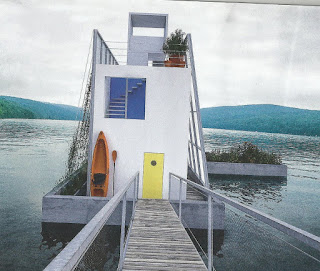
Hay muchos tipos de viviendas pero hablaremos de esa nueva tendencia de vivienda móvil que cada vez cobra más fuerza en nuestro mundo. La frase de menos es más está empezando a ser una forma de vida y muchas personas se suben a este carro donde su pensamiento empieza a mostrar más protagonismo y donde el tratar de tener menos cargas ayuda a este tipo de vida así como a hacernos más libres.

Intentemos retomar este tema desde los inicios. Hace unos 12000 años, el sedentarismo surgió con el desarrollo de la agricultura y luego se formaron pueblos y con ellos ciudades aglutinando más comodidades que nos atraían porque no se conocían como tal. Evolucionamos lentamente y nuestro cerebro es nómada, por ello,  quizás esa tendencia de ir a ciudades. Según Naciones Unidas, en el 2016 el 54.5% de la población mundial vivía en grandes urbes. Se espera que en el 2030 la cifra sea del 60% y en el 2050 se estima un 66%. Si hablamos de países pobres, estas cifras serán mayores.  Pero esta corriente nos lleva a la saturación de espacio creando un problema difícil de solucionar y como ejemplo tenemos a Japón: hacinamiento y viviendas minúsculas son las soluciones a dicho problema.

La arquitecta Sarah Susanka escribió un libro en 1997 llamado Una casa no tan grande, dando origen al movimiento de las Tiny Houses o casa pequeñas que en Estados Unidos ha ido en aumento. Este movimiento ha dado paso a la arquitectura móvil que no necesariamente tiene que ser pequeña aunque ayuda para ser trasladada. Junto a este movimiento podríamos hablar del minimalismo donde se habla que no hay nada más responsable que vivir en el espacio más pequeño posible evitando almacenar cosas innecesarias que ocupan espacio pero que no sirven para nada.

La arquitectura transportable tiene una explicación cultural y económica ya que las configuraciones sociales han evolucionado y hay muchos tipos de familias. Los hogares unipersonales o monoparentales ( en España el 30.5% del total, según la INE, son parejas sin hijos) y la economía hacen que este tipo de viviendas sean una solución para estos perfiles familiares.
Rebecca Roke escribió un libro donde hablaba  de cómo la arquitectura móvil ofrece soluciones para distintos tipos de migraciones: personas que desean  llevar una vida mejor en otro lugar, las personas desplazadas debido a desastres medioambientales…  Ikea, se llevó el premio a la vivienda compacta que creo junto a Acnur (Beazley Design of the Year).

Por otro lado, Michael Kimmelman, crítico de arquitectura del New York Times, incluyó a los migrantes de clase media: educados, curiosos y con ganas de experimentar la vida en diferentes lugares.
Es una decisión sin marcha atrás , el mundo cambia al igual que las necesidades humanas y si además añadimos la necesidad de libertad que anhelamos todos los que hemos estado o estamos sometidos a estrictos horarios, disciplina y exigencia laboral, veremos como esta nueva corriente tomará cada vez más fuerza y más seguidores porque los que necesitamos es libertad, movernos y respirar. Para eso fuimos creados.

Montserrat A


OUR HOUSE: WITH US ALWAYS
Nowadays, the way of life has changed a lot. We have become more nomadic because we can work anywhere in the world and that work can change at any time, for economic or cultural reasons. Therefore, and many more reasons we can live in a flat, a house or in any other type of habitable redoubt where we feel comfortable because our needs, each time less, are covered.
There are many types of housing but we will talk about this new trend of mobile housing that is becoming increasingly strong in our world. The phrase of less is more is beginning to be a way of life and many people get into this car where their thinking begins to show more prominence and where trying to have less burdens helps this type of life as well as to make us more free .

Let's try to take up this issue from the beginning. About 12000 years ago, sedentary lifestyle arose with the development of agriculture and then towns were formed and with them cities bringing together more amenities that attracted us because they did not know each other as such. We evolved slowly and our brain is nomadic, therefore, maybe that tendency to go to cities. According to the United Nations, in 2016 54.5% of the world population lived in large cities. It is expected that in 2030 the figure will be 60% and in 2050 an estimated 66%. If we talk about poor countries, these figures will be higher. But this current leads to the saturation of space creating a difficult problem to solve and as an example we have Japan: overcrowding and tiny homes are the solutions to this problem.

The architect Sarah Susanka wrote a book in 1997 called A house not so big, giving rise to the movement of the Tiny Houses or small houses that in the United States has been increasing. This movement has given way to mobile architecture that does not necessarily have to be small, although it helps to be moved. Along with this movement we could talk about minimalism where there is talk that there is nothing more responsible than living in the smallest space possible, avoiding unnecessary things that occupy space but are useless.

The transportable architecture has a cultural and economic explanation since social configurations have evolved and there are many types of families. Single-person or single-parent households (in Spain 30.5% of the total, according to the INE, are couples without children) and the economy make this type of housing a solution for these family profiles.
Rebecca Roke wrote a book where she talked about how mobile architecture offers solutions for different types of migrations: people who want to lead a better life elsewhere, people displaced due to environmental disasters ... Ikea won the prize for compact housing I believe together with Acnur (Beazley Design of the Year).

On the other hand, Michael Kimmelman, architecture critic of the New York Times, included middle class migrants: educated, curious and eager to experience life in different places.
It is a decision without going back, the world changes as well as human needs and if we also add the need for freedom that all of us who have been or are subjected to strict schedules, discipline and work demands, we will see how this new current will take each time more strength and more followers because what we need is freedom, move and breathe. For that we were created.

Montserrat A

miércoles, 8 de mayo de 2019

Las enzimas


En 1836 Théodore Schwann pudo aislar y concentrar, a
partir del jugo gástrico, una sustancia capaz de desintegrar y disolver la proteína. Hoy en día se sabe que las reacciones bioquímicas sólo son posibles  en presencia de proteínas especializas: Las enzimas.

Las enzimas no sólo actúan fuera de las células como en la fermentación alcohólica o en la digestión,  también lo hacen en el interior de las mismas, permitiendo extraer energía de los alimentos. Cada enzima funciona a su propia velocidad y ésta depende de las condiciones ambientes del momento, en especial la temperatura y el pH. La mayoría de las enzimas se inactivan entre 50 y 60ºC, excepto las que se encuentran en determinadas bacterias que resisten hasta los 100ºC.

Las enzimas humanas tienen su actividad optima a la temperatura corporal normal, pero aumenta aún más con la fiebre hasta llegar a un punto crítico en el que la actividad enzimática desaparece irreversiblemente por desnaturalización. Con el frío sufren un descenso de actividad por ello es efectivo los baños calientes para reactivarlas.

Determinadas sustancias se comportan como inhibidores enzimáticos anulando temporal o definitivamente su acción. Por ejemplo , los insecticidas organofosforados.
Actualmente se conocen 2500 enzimas que actúan en nuestro organismo y se agrupan en 6 grandes grupos:
·       Oxidoreductasas: Aseguran la transferencia de electrones de un oxidante a un reductor.
·       Transferasas: Transportan grupos de moléculas desde un emisor a un receptor.
·       Isomerasas: Trasladan algunas moléculas de un sustrato modificándolas.
·       Hidrolasas: Son las más importantes en el sistema digestivo.
·       Ligasas: liberan energía formando nuevas uniones moleculares.
·       Liasas: Modifican el sustrato por adición de átomos.

Desde luego no vamos a evaluar todas las enzimas del organismo pero si hablaremos de manera resumida de algunas de ellas y de donde se encuentran.

Enzimas en la digestión
Cuando comemos, absorbemos protéinas, lípidos y glúcidos pero es necesario tener , en este caso, tres grupos de enzimas para poder transformar estos grupos.  Por ejemplo, las enzimas proteolíticas son capaces de disgregar 300gr de proteína/h. Las enzimas lipolíticas pueden tratar 175gr de grasa/h. Las enzimas amilolíticas son capaces de degradar hasta 300gr de hidratos de carbono/h.

Las enzimas de los alimentos
Cuando hablamos de poder comprar productos biológicos o bien con maduración natural en planta es porque todos estos alimentos mantienen sus propias enzimas. Tomar productos frescos y madurados en su propia mata es muy importante para que sus enzimas nos ayuden a procesar las categorías básicas de proteínas, lípidos y glúcidos.
No olvidar que las enzimas se destruyen en el proceso de cocción, en su mayoría, y en procesos industriales, por ello, el vapor es el procedimiento de cocción mejor para los alimentos y que sean frescos hace que nos podamos favorecer de sus propiedades.

La fermentación.
Este proceso produce una gran cantidad de enzimas y vitaminas. La acción de los fermentos en el sistema digestivo son múltiples e importantes para nuestro equilibrio. Citamos algunos:
·       Proporcionan enzimas y vitaminas que ayudan a una mejor asimilación de los alimentos.
·       Suministran bacterias para repoblar la flora del intestino grueso.
Como veis, todo es importante a la hora de alimentarnos pero sobre todo la elección de los alimentos es lo más importantes porque dependeremos de ellos si queremos que nuestro organismo esté regulado de forma equilibrada. Fuente: (El equilibrio a través de la alimentación. Olga Cuevas Fernández)

Montserrat A


The enzymes
In 1836 Théodore Schwann was able to isolate and concentrate, from the gastric juice, a substance capable of disintegrating and dissolving the protein. Nowadays it is known that biochemical reactions are only possible in the presence of specialized proteins: enzymes.

Enzymes not only act outside the cells as in alcoholic fermentation or digestion, they also do it inside them, allowing energy to be extracted from food. Each enzyme works at its own speed and this depends on the environmental conditions of the moment, especially the temperature and pH. Most enzymes are inactivated between 50 and 60ºC, except those found in certain bacteria that resist up to 100ºC.

The human enzymes have their optimal activity at normal body temperature, but it increases even more with fever until reaching a critical point in which enzymatic activity disappears irreversibly by denaturation. With the cold they suffer a decrease in activity, so hot baths are effective to reactivate them.

Certain substances behave as enzymatic inhibitors, temporarily or permanently canceling their action. For example, organophosphorus insecticides.

At present 2500 enzymes are known that act in our organism and are grouped into 6 large groups:
• Oxidoreductases: They ensure the transfer of electrons from an oxidant to a reducer.
• Transferases: Transport groups of molecules from a transmitter to a receiver.
Isomerases: They transfer some molecules of a substrate modifying them.
• Hydrolases: They are the most important in the digestive system.
• Ligasas: they release energy forming new molecular bonds.
• Liasas: Modify the substrate by the addition of atoms.

Of course we are not going to evaluate all the enzymes of the organism but we will talk in a summarized way about some of them and where they are.

Enzymes in digestion
When we eat, we absorb proteins, lipids and carbohydrates but it is necessary to have, in this case, three groups of enzymes to be able to transform these groups. For example, proteolytic enzymes are capable of breaking down 300gr of protein / h. Lipolytic enzymes can treat 175gr of fat / h. The amylolitic enzymes are capable of degrading up to 300gr of carbohydrates / h.

The enzymes of food
When we talk about being able to buy biological products or with natural maturation in plant is because all these foods maintain their own enzymes. Taking fresh and ripened products in their own bush is very important for their enzymes to help us process the basic categories of proteins, lipids and carbohydrates.
Do not forget that the enzymes are destroyed in the cooking process, mostly, and in industrial processes, therefore, steam is the best cooking method for food and that being fresh means that we can benefit from its properties.

The fermentation
This process produces a large amount of enzymes and vitamins. The action of ferments in the digestive system are multiple and important for our balance. We quote some:
• They provide enzymes and vitamins that help a better assimilation of food.
• They supply bacteria to repopulate the flora of the large intestine.
As you can see, everything is important at the time of feeding us but above all the choice of food is the most important because we will depend on them if we want our body to be regulated in a balanced way. Source: (Balance through food Olga Cuevas Fernández)

Montserrat A