Mostrando entradas con la etiqueta PASTA. Mostrar todas las entradas

miércoles, 22 de agosto de 2018

Fideos de Arroz


Los fideos de arroz son elaborados con pasta o harina de arroz. Para la elaboración de los fideos de arroz, los principales ingredientes son harina de arroz y agua principalmente, algunas veces se añade algún otro ingrediente como yuca o almidón de maíz. Son uno de los productos más usados en Asia, por nuestra parte en América utilizamos más la pasta regular.

Es considerado como un carbohidrato lo que proporciona energía inmediata al organismo. En comparación con la pasta regular, los fideos de arroz carecen de ciertos nutrientes, es decir, nutricionalmente es más completa la pasta regular.

Beneficios Nutricionales
Libres de Gluten: Los fideos de arroz no contienen gluten, por lo que se convierten en una opción versátil para los pacientes con enfermedad Celíaca. Esta es una de las principales características que tiene con respecto a la pasta regular.

Proteína: La pasta regular contiene alrededor de 4 gramos de proteína mientras que los fideos de arroz contienen menos de 1 gramo por porción. Se recomienda combinarlos con alguna fuente de proteína magra para incrementar su contenido proteico.

Fibra: Ambos tipos de pasta contienen poca cantidad de fibra, los fideos de arroz tienen menos de 1 gramo y la pasta regular aporta aproximadamente 1.3 gramos de fibra. Combínelos con vegetales para incrementar su contenido de fibra y que esto a la vez le permita quedar más lleno.

Colesterol: Tienen un aporte bajo en colesterol por lo que se recomienda para personas con problemas de perfil lipídico alterado. Su aporte de grasa es casi nulo, menos de 1 gramo por porción.

Sodio: Tienen un aporte bajo de sodio, lo que los hace ideales para pacientes con Hipertensión Arterial.

Ricos en Nutrientes: Los fideos de arroz son ricos en minerales, como fósforo, hierro, potasio y vitaminas, además contiene 8 de los 9 aminoácidos esenciales, sin embargo, en comparación con la pasta; la pasta regular tiene 83 microgramos de ácido fólico mientras que los fideos de arroz contienen 3 microgramos. El ácido fólico es un nutriente fundamental para las mujeres en edad fértil y en etapa de embarazo.

Aporte calórico moderado: Tanto la pasta regular como los fideos de arroz son similares en su aporte calórico. ½ taza de pasta regular aporta aproximadamente 111 calorías, mientras que los fideos de arroz aportan 96 calorías.

Forma de Preparación
Los fideos de arroz se hierven en agua por tres o cuatro minutos, sin dejar de revolver para que queden lo más sueltos posibles. Se remojan con agua fría y se dejan escurrir.

Valor Nutricional en ½ taza
• Calorías: 96
• Grasa Total: 0.2 g
• Colesterol: 0 mg
• Sodio: 17 mg
• Carbohidratos: 21.9 g
• Fibra: 0.9 g
• Proteína: 0.8 g

Algunas recetas con Fideos de Arroz
Es una opción muy versátil en la cocina por lo que se puede combinar casi con todo tipo de vegetales, carnes y salsas para darle más sabor.
• Sopa de pollo con fideos de arroz y vegetales.
• Ensalada verde con fideos de arroz y pechuga de pollo.
• Arroz mixto con fideos de arroz y trocitos de res.

Montserrat A


viernes, 13 de abril de 2018

CANELONES DE CARNE


Me encantan los canelones de carne y la pasta fresca  así que hoy os explico cómo hago mis canelones.

Para 8 personas compramos 24 láminas de pasta fresca para canelones, 800 gr de carne de ternera y 800 gr de carne de cerdo. Una lata de pate de cerdo, 1 cebolla mediana, aceite de oliva,  mantequilla, harina de espelta, leche, pimienta, sal y nuez moscada.
Para prepararlo debemos pedir que piquen la carne dos veces para que no la notemos   demasiado gruesa, aunque va a gusto del consumidor.
Para preparar la carne  debemos empezar por picar muy fina la cebolla .  En una sartén, ponemos aceite de oliva para calentar, añadimos la cebolla y la pochamos a fuego medio.
En un bol, a parte, mezclamos las carnes bien y añadimos el pate rectificando de sal, pimienta.
Cuando este casi dorada ponemos un poco de sal, nuez moscada y pimenta negra. Cuando este dorado, añadiremos la carne y la haremos poco apoco. La probaremos y rectificaremos de sal y pimienta así como de nuez moscada. Las cantidades dependerán del gusto del consumidor.
Cuando esté lista, la volvemos a poner en el bol y la trituramos de nuevo con el minipimer. Una vez veamos que la carne esté más fina y melosa, la mezclaremos con una buena cantidad de bechamel, luego explico cómo hacerla.

Una vez tengamos la carne lista y con la textura que nos agrade, ponemos a cocer las láminas de pasta para envolver el canelón.  Cogemos una olla la llenamos de agua , sal y un chorro de aceite y tiramos las láminas una a una . Las dejamos tanto tiempo como nos indique el fabricante o bien como nos guste la pasta. Cuando esté lista, la lavamos con agua fría para cortar la cocción y la estiramos encima de unos paños de algodón para poder rellenarlos con la carne que hemos preparado. Enrollaremos los canelones  y los pondremos en una bandeja que previamente la habremos engrasado con aceite para que no se peguen.

Una vez hecho, pasaremos a hacer la bechamel de la siguiente manera:
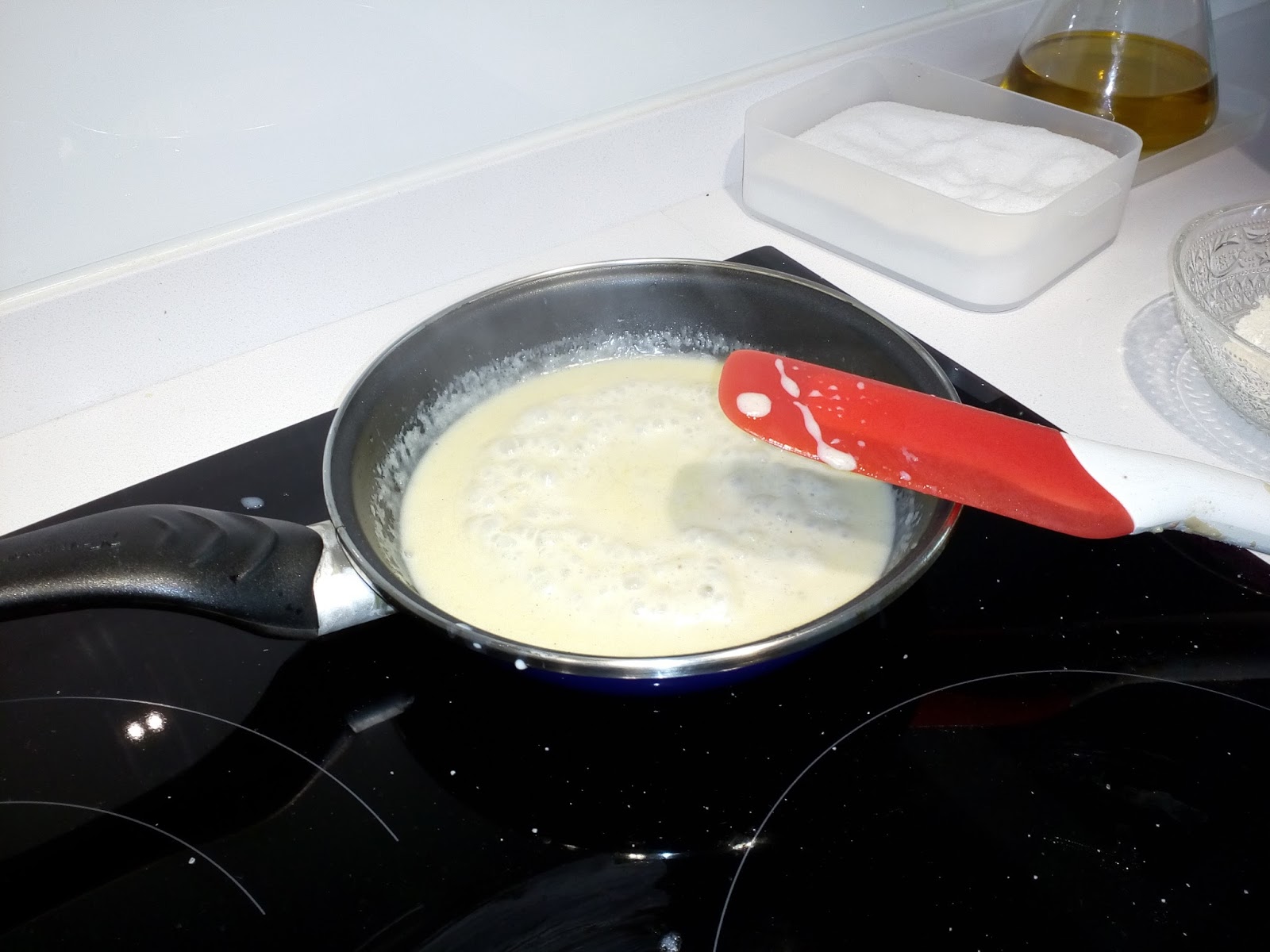
En una sartén pondremos una cucharada de mantequilla a fuego medio, cuando este fundida añadiremos la harina poco a poco, unas 4 cucharadas. Luego removeremos para cocinar la harina durante unos pocos minutos, añadiremos la leche, 250ml fría y removeremos, cuidado con los grumos, pasados 5 minutos añadiremos 250 ml más de leche y seguiremos removiendo para que no se creen grupos y deshacerlos.
canelones terminado
Lo cocinaremos durante 10-15 minutos pero contra más se cocine más suave y rica estará.

Cuando la tengamos la tiraremos por encima de los canelones y le añadiremos un poco de queso rallado y trocitos de mantequilla.  Pondremos el horno a calentar a 180ª y los gratinaremos.
No dejar hecha la bechamel sin utilizar pues se podría hacer una piel gruesa por encima y no sería agradable. La bechamel hay que hacerla cuando se vaya a utilizar y no dejarla reposar demasiado.
Espero que os guste.

Montserrat A


MEAT CANNELS
I love meat cannelloni and fresh pasta so today I explain how I make my cannelloni.
For 8 people we bought 24 sheets of fresh pasta for cannelloni, 800 gr of beef and 800 gr of pork. A can of pork pate, 1 medium onion, olive oil, butter, spelled flour, milk, pepper, salt and nutmeg.
In order to prepare it we must ask that they bite the meat twice so that we do not notice it too thick, although it goes to taste of the consumer.

To prepare the meat we must start by chopping the onion very fine. In a frying pan, we put olive oil to heat, we add the onion and we fry it to average fire.
In a bowl, apart, mix the meats well and add the pate by grinding salt, pepper.
When it is almost brown we put some salt, nutmeg and black pepper. When golden, we will add the meat and we will do little apoco. We will try and rectify salt and pepper as well as nutmeg. The amounts will depend on the taste of the consumer.
When it is ready, we put it back in the bowl and we grind it again with the minipimer. Once we see that the meat is finer and mellow, we will mix it with a good amount of béchamel, then explain how to make it.

Once we have the meat ready and with the texture that we like, we cook the sheets of pasta to wrap the cannelloni. We take a pot filled with water, salt and a stream of oil and throw the sheets one by one. We leave them as long as the manufacturer indicates or we like the pasta. When it is ready, we wash it with cold water to cut the cooking and we stretch it on some cloths of cotton to be able to fill them with the meat that we have prepared. We will roll the cannelloni and put it in a tray that we have previously greased with oil so they do not stick.

Once done, we will proceed to make the béchamel in the following way:
In a frying pan put a spoonful of butter over medium heat, when it is melted add the flour little by little, about 4 tablespoons. Then we will stir to cook the flour for a few minutes, add the milk, cold 250ml and remove, be careful with the lumps, after 5 minutes add 250 ml more milk and continue stirring so that groups are not created and undone. We will cook it for 10-15 minutes but more will cook smoother and richer.

When we have it we will throw it over the cannelloni and add some grated cheese and small pieces of butter. We will put the oven to heat to 180ª and gratinaremos.
Do not leave the béchamel unused as it could make a thick skin over and it would not be nice. The béchamel must be made when it is to be used and not let it rest too much.
I hope you like it.

Montserrat A


lunes, 19 de febrero de 2018

PASTA CON VERDURAS Y PAVO


Después de un buen ejercicio hace falta reponer fuerzas y no hay mejor manera que tomar pasta y vegetales. Calorías llenas de energía y de vitaminas para reconstituir nuestro organismo después de un gran esfuerzo.

Hoy he preparado pasta fresca con verduras y pavo. Es un plato económico, fácil de hacer y apetecible. Paso a daros los ingredientes para tres personas:

Para la salsa: (la medida es un bol de cristal igual que el de la foto)
½ bol de champiñones frescos cortados y ½ bol de calabacín cortado en cuadraditos.
½ bol de pimiento rojo y medio de verde, cortados en juliana
3 tomates rojos pelados y cortados a dados.
1 cebolla mediana picada
Dos ramas de tomillo fresco y un poco de orégano
Aceite de oliva, sal, azúcar moreno, pimienta y una cayena pequeña
1 filete de pavo cortado a trocitos pequeños
300 gr de pasta fresca.

Empezamos preparando los ingredientes y cortando las verduras una por una organizándolo por bol: los pimientos en uno, los champiñones y el calabacín en otro, la cebolla en otro y el tomate en otro.
Ponemos una olla al fuego y añadimos un chorro generoso de aceite de oliva, una vez está caliente procedemos a pochar la cebolla. Cuidado con el fuego, en ese momento, hay que bajarlo a fuego medio y remover continuamente para que no se queme.

Transcurridos 4 minutos, añadimos los pimientos, salpimentamos y removemos durante 5 minutos más; en ese momento hay que añadir las ramitas de tomillo fresco. Una vez tenemos la cebolla casi hecha y el pimiento a medias, añadimos el pavo que habremos cortado previamente a trozos pequeños para facilitar su ingesta. Removeremos durante tres minutos más.
Luego añadiremos el tomate, removeremos durante dos minutos e incluiremos los champiñones y el calabacín. Seguimos removiendo y veremos que el tomate se irá deshaciendo y dejando un jugo, aquí añadimos un buen pellizco de orégano.

Pasados 5 minutos añadimos sal, la cayena partida en varios trozos, pimienta, un poco de azúcar para romper el ácido del tomate y un chorrito de vino blanco (poco). Vamos removiendo y separamos las ramitas de tomillo que ya no nos servirán.
Tapamos la olla y dejamos, a fuego medio, durante 15 minutos. No olvidemos de remover o se pegará.

En ese momento ponemos a calentar en otra olla abundante agua con sal para hervir la pasta. Cuando empiece a hervir, metemos la pasta y cuando vuelva a arrancar la ebullición contaremos unos 4 minutos. No olvidar que los tiempos que marco dependerán de la intensidad del fuego y del gusto de cada uno. Así que cuidado.

A medida que transcurra el tiempo veremos que el caldo de la salsa va evaporándose. Cuando la cocción de la pasta la tengamos al dente, la escurrimos pero no le pasamos agua fría y la añadimos, bien escurrida, a la olla de la salsa dejándola durante 3 minutos más, sin dejar de remover y mezclando bien la pasta con la salsa. Se deja reposar pocos segundos y se sirve.
Está muy buena así que espero que os guste.

Montserrat A


PASTA WITH VEGETABLES AND TURKEY
After a good exercise it is necessary to regain strength and there is no better way than to take pasta and vegetables. Calories full of energy and vitamins to reconstitute our body after a great effort.
Today I have prepared fresh pasta with vegetables and turkey. It is an economic dish, easy to make and appetizing. Step to give you the ingredients for three people:

For the sauce: (the measure is a glass bowl equal to the one in the photo)
½ bowl of fresh cut mushrooms and ½ bowl of zucchini cut into squares.
½ bowl of red and half green pepper, cut in julienne
3 red tomatoes peeled and cut into cubes.
1 medium onion, chopped
Two branches of fresh thyme and a little oregano
Olive oil, salt, brown sugar, pepper and a small cayenne
1 turkey fillet cut into small pieces
300 gr of fresh pasta

We start preparing the ingredients and cutting the vegetables one by one organizing it by bowl: peppers in one, mushrooms and zucchini in another, onion in another and tomato in another.
We put a pot on the fire and add a generous jet of olive oil, once it is hot proceed to poach the onion. Beware of fire, at that time, you have to lower it to medium heat and stir continuously so that it does not burn.

After 4 minutes, add the peppers, season and stir for 5 more minutes; At that time you have to add the sprigs of fresh thyme. Once we have the onion almost done and the pepper half done, we add the turkey that we will have previously cut into small pieces to facilitate its intake. We will remove for three more minutes.
Then add the tomato, stir for two minutes and include the mushrooms and zucchini. We continue stirring and we will see that the tomato will go undoing and leaving a juice, here we add a good pinch of oregano.

After 5 minutes add salt, the cayenne divided into several pieces, pepper, a little sugar to break the tomato acid and a splash of white wine (little). We are stirring and we separate the twigs of thyme that will no longer serve us.
Cover the pot and leave, over medium heat, for 15 minutes. Do not forget to remove or stick.
At that time we put to heat in another pot plenty of salt water to boil the pasta. When it starts to boil, put the pasta and when the boiling starts again we will have about 4 minutes. Do not forget that the times that frame will depend on the intensity of the fire and the taste of each one. So be careful.
As time goes by, we will see that the broth of the sauce evaporates. When the pasta is cooked al dente, we drain it but do not pass it cold water and add it, well drained, to the saucepan leaving it for 3 more minutes, stirring and mixing the pasta well with the sauce. Let it rest a few seconds and serve.
It's very good so I hope you like it.

Montserrat A

jueves, 27 de marzo de 2014

PASTA A LA NORMA, MUY SICILIANO PERO EXQUISITO

PASTA A LA NORMA
Cuando estuve en Sicilia probé una de las delicias de la isla, la pasta
a la norma. En ese momento no tenía ni idea de lo que era pues no lo había oído nunca pero , como no, allí que fui a probarlo.
Ya sabéis que en Italia lanzarse a probar algo desconocido en cuanto a temas culinarios , siempre es apostar por el caballo ganador.
Pues bien, la pasta a la norma es pasta con berenjena y ricota algo increíble, creedme. Si vais no olvidéis de probarlo.

Ingredientes (2 personas)
Pasta fresca spaguetti ( por ejemplo)
4 Tomates rojos maduros
2 ramas de albahaca fresca
2 chalotas pequeñas
1 berenjena
Sal
Pimienta
Ricota
 
Preparación
Primero pelamos la berenjena y cortamos 6 rebanadas finas ( 0,5 cm) ,
el resto de berenjena la cortamos a dados pequeños . Las dejamos unos minutos con agua y sal para que pierdan amargor.
Cortamos las chalotas finas para sofreír y rascamos los tomates.
Empezamos con el sofrito de la pasta que nos llevará algo más de tiempo. Mientras tanto, ponemos a calentar en una olla agua abundante para cocer la pasta que deberá estar al dente. Añadir al agua unas hojas de laurel y un chorrito de aceite de oliva. Cuando el agua este hirviendo, poner la pasta y vigilar que no se pase de tiempo.
Empezamos poniendo una sartén en el con aceite de oliva a calentar y añadimos la chalota , la removemos para que se dore pero que no se queme; luego añadimos la berenjena cortada a dados poniendo sal y pimienta al gusto. Cuando esté listo añadiremos el tomate hasta que pierda el agua. Una vez este la separamos y la reservamos en un sitio caliente.
Mientras ponemos en otra sartén un poco de aceite y freímos las berenjenas que hemos cortado en láminas pero antes las rebozamos con huevo y harina de pan. Cuando estén doradas las sacamos y las ponemos en un plato con una servilleta de papel para absorber el aceite.
Escurrimos la pasta cuando esté y en la misma olla mezclamos la pasta  y la salsa. Cortamos las hojas de albahaca fresca fina para espolvorear por el plato.
Lo ponemos todo en una bandeja con la albahaca espolvoreada, las berenjenas rebozadas encima como adorno y la ricota deshecha por encima. No escatimar en ricota.
Espero que os guste.

Montserrat A.

PASTA A LA NORMA
When I was in Sicily I tried one of the delights of the island, the Pasta a la Norma. At that time I had no idea what it was because I had never heard but of course, I went there to test it.
You know that in Italy you rush to try something unknown about culinary topics , always bet on the winning horse .
Well, the standard pasta is pasta with eggplant and ricotta incredible, believe me . If you go do not forget to try it.

Ingredients ( 2 people )
Fresh pasta spaghetti ( for example)
4 red ripe tomatoes
2 sprigs of fresh basil
2 small shallots
1 eggplant
salt
pepper
ricotta

Preparation
First peel the eggplant and cut 6 thin slices (0.5 cm) , the rest of the eggplant cut into small dice. We left a few minutes in salted water to lose bitterness.
Cut the shallots to fry thin scratch and tomatoes.
We started with the fried dough that will take us some more time . Meanwhile, put to boil in a pot to cook pasta abundant that water should be al dente . Add the water a few bay leaves and a drizzle of olive oil. When the water is boiling , add the pasta and not watch time pass .
We started putting a pan in olive oil to heat and add the shallot , the stir to brown but not burn , then add the eggplant cut into cubes we put salt and pepper to taste. When ready add the tomato until it loses water. After this we separate and reserve in a warm place .
While in another pan put a little oil and fry the eggplant we have cut the sheet but before rebozamos with egg and bread flour. When the golden brown remove and put them on a plate with a paper towel to absorb the oil .
When we drain the pasta in the same pot and mix the pasta and sauce . Cut fresh basil leaves to sprinkle fine home.
We put everything on a tray sprinkled with basil, breaded eggplant on top as a garnish and undone over the ricotta . No skimping on ricotta .
Hope you like it .


A. Montserrat

martes, 25 de septiembre de 2012

Pasta fresca con col y nueces


TALLARINES CON COL Y NUECES
Ingredientes:
Queso rallado parmesano
250 gr col lombarda y verde
Tallarines
Pimienta y sal
40gr de almendras
60 ml de vino blanco
4 ajos ( 1 picado)
Se cuecen los tallarines al dente y se reservan.
Cortamos la col verde y la lombarda en tiras finas y se escaldan por separado, se escurren y se reservan.
En una sartén con aceite de olivas se saltean 3 ajos y se le añaden las tiras de col verde durante 10 minutos. Luego , se incorpora la col lombarda durante 5 minutos y se añade un ajo picado las nueces y las almendras peladas rehogándolo todo con 60ml de vino blanco.
Todo se deja cocer durante 6 minutos más o menos.
Por último, se saltean los tallarines en una cazuela con aceite de oliva, espolvoreando queso rallado parmesano pimienta y sal. Una vez hecho se mezcla con el sofrito de las nueces y la col. . Listo!!
Aportes de los ingredientes:
Antioxidantes. La col, rica en calcio, vitaminas Ay C y betacarotenos que previenen el envejecimiento celular.
Nueces, Omega3 y 6, estos ácidos grasos facilitan la circulación.

Montserrat A.

NOODLES WITH CABBAGE AND WALNUTS
 ingredients:
 Grated Parmesan
 250g green cabbage and
 noodles
 Salt and pepper
 40g of almonds
 60 ml white wine
 4 garlic (1 minced)
 Cook the noodles al dente and set aside.
 Cut the kale and cabbage into thin strips and blanched separately, drain and set aside.
 In a skillet with olive oil and garlic sauté 3 are added green cabbage strips for 10 minutes. Then, he joined the cabbage for 5 minutes and add chopped garlic nuts and whole peeled almonds rehogándolo with 60ml of white wine.
 All cook for 6 minutes or so.
 Finally, the noodles are sautéed in a pan with olive oil, sprinkle grated parmesan cheese salt and pepper. Once done with mixed nuts and fried cabbage. . Ready!
 Contributions of the ingredients:
 Antioxidants. Cabbage is rich in calcium, vitamins A and C and beta carotene that prevent cellular aging.
 Nuts, Omega3 and 6, these fatty acids facilitate the circulation.