Mostrando entradas con la etiqueta CULTURA. Mostrar todas las entradas

viernes, 14 de abril de 2023

Ferrol: El Arte de Eduardo Hermida

 La semana pasada, estuve en Ferrol para ver las procesiones , las cuales me parecieron una maravilla. No había ido nunca pero todo el mundo me hablaba bien de ellas y debo decir que no defraudaron en absoluto. 

Pero no voy a hablar de las procesiones sino de un artista local llamado Eduardo Hermida. El es el autor  y creador de las meninas de Canido. 

Nació en Ferrol y estudio dibujo en la escuela de artes Pablo Picasso de A Coruña. Es un artista multidisciplinar: profesor de escaparatismo, profesor de dibujo y pintura entre otras destrezas profesionales y artísticas.

En el barrio de Canido, se contabilizan alrededor de unas 450 obras, aunque lamentablemente, debido al estado de algunas fachadas y el deterioro de algunas obras no todas mantienen su atractivo.

En cualquier caso, merece la pena pasearse por la calles del barrio contemplando algunas magnificas obras que te dejan boquiabierto; no solo por sus dimensiones, sino por el talento que guarda cada una de ellas.


Aunque hay una web oficial que habla del pintor y de estos murales, personalmente creo que no está lo suficientemente promocionado , como debiera y es una pena ya que sería un punto de interés más que tendría la ciudad.

Yo os insto a visitarlo y si además elegís un día soleado y agradable podréis aprovechar para tomar un vermut en algunos de los bares ubicados en plazas donde se puede disfrutar de un ambiente bohemio, agradable  y joven.

Os dejo algunas fotos tomadas por mi para que podáis haceros una idea del lugar y de su encanto. Merece la pena visitarlo.

Montserrat A. 


Eduardo Hermida Art

Eduardo Hermida is the author and creator of "Las Meninas de Canido" in Ferrol. 

He was born in Ferrol and he studied drawing in A Coruña. He is a multidisciplinary artist and he works as a teacher of drawing and painting and also as a window dresser among other skills.

An excellent meeting point  can be "crucero de Canido square".
In Canido neighbourhood.

We can count around 450 works in the whole neighbouhood, although unfortunately , due to the state of some façades and the damage of some paintings not all of them keep up its attractiveness. 

In any case, it is worthwhile to walk through the neighbourhood streets regarding some great paintings that blow your mind; not only because of its size, but also because of the talent that each one of them have.

Even though, there is an official webside which talks about them, it is not too much promoted as it should be and it is a pity, as it would be an additional point of interest for the city.

I call on to visit it and if you also choose a sunny  and pleasant day, you can take the opportunity to have a "vermouth" in some of the bars located in the squares where you can enjoy  a bohemian and young atmosphere.


Have a look! to these photos taken by me. It can help you to have an idea of the place and its personal charming.

Montserrat A. 


miércoles, 24 de abril de 2019

Comentario de libro: Todo lo que no te conté.


Soy una lectora empedernida que hace un año y medio
me apunté a un club de lectura estupendo y donde he aprendido a valorar la literatura tanto si es buena como si no lo és.
Creo que hoy en día la literatura ha cambiado mucho y no toda esta ceñida a las normas literarias. Ahora hay mucha tendencia a la literatura que habla de sentimientos, de la vida diaria, de las experiencias personales… y todas tienen algo especial. A partir de ahora, intentaré dar mi opinión de algunos libros que leo así como comentar algunos aspectos que me parecen interesantes e importantes de nombrar.

Desde aquí, insto a cualquier persona interesada a que dé su opinión sobre ello y exponga su punto de vista ya que un libro no tiene solo un comentario o un punto de vista, tiene tantos como lectores lo lean.
Hoy hablare sobre Todo lo que no te conté escrito por Celeste Ng. Esta escritora nació en Pittsburgh en 1980. Ng estuvo involucrada en el grupo de estudiantes sobre relaciones raciales durante tres años y fue coeditora de la revista literaria de la escuela. Asistió a la Universidad de Harvard, donde completó una licenciatura en filología inglesa. Empezó a tomar clases de escritura creativa en la Universidad de Michigan y decidió seguir escribiendo como carrera.

Sus padres se fueron a Estados Unidos en 1960 desde Hong Kong. Su padre era físico y trabajaba en la Nasa, mientras que su madre era una química que enseñaba en la Universidad estatal de Cleveland.
Todo lo que no te conté es un libro catalogado como thriller pero en realidad yo iría más allá diciendo que se trata de un thriller psicológico. El thriller, no de Lydia , sino de la familia que lejos de vivir intenta sobrevivir. Dicho esto, personalmente, creo que es más un drama familiar que deriva en un thriller. Toda la novela es miedo y está llena de miedos: miedo a vivir, miedo a expresarse, miedo a hablar, miedo a decidir, miedo a decepcionar, miedo al que dirán, miedo a ser diferente… el miedo aniquila a todas las generaciones  de esta historia.

La historia en sí se centra en la historia de la familia. Una obra llena de sentimientos, dolor, soledad, frustración y la muerte como estandarte. La muerte no solo representa a Lydia sino a toda la familia. Una familia muerta como personas y como familia, incapaz de hablar, de transmitir, de hacer el silencio como único modo de subsistencia y relación.
El matrimonio “precoz” e  inmaduro, la sociedad cerrada y estereotipada, la cultura sexista y la prohibición de los matrimonios interraciales en algunos estados, hace que los personajes, como humanos no crezcan.

EL matrimonio permanece junto porque no sabe estar separado, no sabe cómo afrontar que la relación familiar no existe, niegan lejos de hablar y afrontar el duelo de una rotura y  eso les hace aún más infelices.
La frustración pasa de generación en generación dando paso a la insatisfacción personal que mal gestionada lleva a proyectar dicha frustración a los hijos asfixiándolos pero no reparando en que cada uno debería tener su vida y tomar sus propias decisiones.  

Lydia es asediada por su madre porque quiere que sea y consiga lo que ella no pudo nunca conseguir y Lydia la sigue porque no quiere volver a pasar por el trauma de no tener a su madre lejos de nuevo llegando a un punto sin retorno. Su personalidad esta anulada y no es capaz de valorar sus capacidades y límites.
Su hermano es brillante en los estudios pero no se valora porque es lo que está establecido pero tiene un secreto y es un hilo homosexual que no descubrirá hasta muy entrada la novela. Pero tampoco habla de ello si no que lo lleva escondido.

Jack, el teórico novio de Lydia se le critica por tener fama de don juan pero nunca la toca y siempre la respeta. Sus visos de homosexualidad también están ahí aunque tampoco se habla de ello. En la sociedad de esa época se escondía y hasta estaba penado así que los comportamientos extraños también tenían un doble significado.
Hannah, la hermana pequeña es invisible aunque apunta maneras de ser la siguiente Lydia, aunque no sabemos si llegará a ser así o por el contrario será capaz de huir.
Me pareció un libro muy interesante y con escritura ágil que nos explica cómo era la sociedad de antaño y el gran problema que tiene el no solucionar un trauma y no pasar un duelo en vez de negar la evidencia.

Montserrat A


Book comment: Everything I did not tell you.
I am an inveterate reader who a year and a half ago I signed up for a great reading club and where I have learned to value literature whether it is good or not.
I think that nowadays literature has changed a lot and not everything is bound to literary norms. Now there is a lot of tendency to literature that talks about feelings, daily life, personal experiences ... and they all have something special. From now on, I will try to give my opinion of some books that I read as well as comment on some aspects that I find interesting and important to name.
From here, I urge any interested person to give their opinion about it and expose their point of view since a book does not have just a comment or a point of view, it has as many as readers read it.
Today I will talk about Everything I did not tell you written by Celeste Ng. This writer was born in Pittsburgh in 1980. Ng was involved in the group of students on race relations for three years and was co-editor of the literary magazine of the school. He attended Harvard University, where he completed a degree in English philology. He began taking creative writing classes at the University of Michigan and decided to continue writing as a career.

His parents left for the United States in 1960 from Hong Kong. His father was a physicist and worked at NASA, while his mother was a chemistry teacher at Cleveland State University.
All I did not tell you is a book classified as a thriller but in reality I would go further saying that it is a psychological thriller. The thriller, not of Lydia, but of the family that, far from living, tries to survive. That said, personally, I think it's more a family drama that derives in a thriller. The whole novel is scary and full of fears: fear of living, fear of expressing oneself, fear of speaking, fear of deciding, fear of disappointment, fear of what they will say, fear of being different ... fear annihilates all generations of this history.

The story itself focuses on the history of the family. A work full of feelings, pain, loneliness, frustration and death as a standard. Death not only represents Lydia but the whole family. A dead family as people and as a family, incapable of speaking, of transmitting, of making silence as the only way of subsistence and relationship.
The "precocious" and immature marriage, the closed and stereotyped society, the sexist culture and the prohibition of interracial marriages in some states, make the characters, as humans, do not grow.
Marriage stays together because it does not know how to be separated, it does not know how to face the fact that the family relationship does not exist, they deny far from talking and face the mourning of a break and that makes them even more unhappy.
The frustration passes from generation to generation giving way to personal dissatisfaction that poorly managed leads to projecting this frustration to the children by suffocating them but not noticing that each one should have their life and make their own decisions.

Lydia is besieged by her mother because she wants it to be and get what she could never get and Lydia follows her because she does not want to go through the trauma of not having her mother away again reaching a point of no return. His personality is canceled and he is not able to assess his abilities and limits.
His brother is brilliant in the studies but is not valued because it is what is established but has a secret and is a homosexual thread that will not discover until very late the novel. But he does not talk about it, but he has it hidden.

Jack, Lydia's theoretical boyfriend is criticized for having a reputation as don Juan but he never touches her and always respects her. His visions of homosexuality are also there although it is not talked about either. In the society of that time was hidden and even punished so the strange behavior also had a double meaning.
Hannah, the little sister is invisible but points out ways to be the next Lydia, although we do not know if it will be this way or on the contrary will be able to flee.
I thought it was a very interesting book with an agile writing that explains how the old society was and the great problem of not solving a trauma and not passing a duel instead of denying the evidence.

Montserrat A

lunes, 1 de abril de 2019

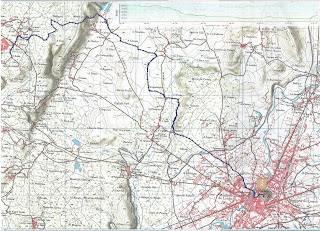
SENDERISMO: De Toiriz Monforte de Lemos (Lugo)


Este mes nos toca una buena tierra y un paraje excepcional.
Visitarlo es un placer pero además si vamos todo el grupo de amigos aun sabe mejor.

Comenzamos la caminata de 14km en O Cotelo. Una aldea habitada por 166 personas. Su iglesia es del siglo XVI con retablos del S. XVII y XVIII.  Nos adentramos por las corredoiras ancestrales del lugar dejando a nuestra izquierda la aldea de Loureiro, atravesando el regato de Vilariño y a unos tres kilómetros llegamos al pazo de Tor.

El pazo de Tor está ligado  al linaje de los Garza desde el S. XIV pero el edificio actual es del S. XVIII de estilo barroco y características Neoclásicas. El edificio tiene forma de U con dos plantas, siendo la superior la residencia de los señores y en la planta baja vivía el servicio. En los edificios anexos se encontraban la bodega, caballerizas… Sus estancias están vestidas con mobiliario de época y otros elementos de la vida cotidiana de interés. La primera estancia que vemos es el Salón de Armas donde encontramos armaduras del S. XVI, bayonetas de la guerra de Cuba y otras curiosidades.

También se puede visitar el cuarto de invitados  con la cama de góndola, ocupada por el poeta Uxío Novoneyra y la del Obispo con la cama típica gallega de castaño y antiguas casullas. La ruta continua por el Salón donde se pueden ver pequeñas estanterías con abanicos, relicarios, etc… luego está el cuarto de estar , dormitorio principal con antiguos muebles y cuadros.. luego pudimos visitar los edificios anexos donde  como una fragua donde se reparaban los utensilios de labranza , una caballeriza que guardan antiguos carruajes y sillas de montar y al final de la ruta vimos la sala de guarniciones.

Es una visita muy amena e interesante ya que todo está en muy buen estado y da la idea de la vida de antaño en las clases sociales altas.
Cuando finalizamos la visita continuamos por el paraje de A Chousa avistando Cinsa y O Campo. Llegamos a O Valado donde cruzamos el rio cinsa , cruzamos la aldea de O Gueto hacia Monforte. Continuamos por un paseo muy bonito cruzando el rio Cabe, llevándonos por  unas estrechas callejuelas que en antaño era la judería hasta el castillo y Monasterio de San Vicente del Pino desde donde tendremos unas vistas inmejorables del lugar. Este conjunto monumental se remonta al S. X aunque la edificación es del S.XVI. La portada es renacentista y su interior es gótico de transición pero su claustro es Neoclásicto. Todo una joya. Del castillo solo queda la torre del homenaje de unos 30 metros de altura del siglo XIII y XIV asi como el palacio del S. XVI, reconstruido en el S.XVII después de un incendio y morada de los Condes de Lemos. Hoy en día, el conjunto está ocupado por el Parador Nacional.

 Montserrat A.

miércoles, 27 de marzo de 2019

El pórtico de la gloria y mucho más.


Este jueves, mis compañeras del club de Arte y yo fuimos a Santiago para visitar el pórtico de la Gloria así como el Palacio Xelmirez pero hubo sorpresas que fueron muy agradables.
Ya sabemos que la Catedral de Santiago ha sido siempre un Tótem no solo para los peregrinos, también para cualquier persona que llegue a la ciudad por primera vez y la que va cada mes a ver esa plaza tan maravillosa donde todo caminante que llega a destino se sienta a contemplar la puerta principal de la Catedral.
Esta como nueva, la verdad es que me pareció divina aunque hay que reconocer que su suciedad y líquenes daba un aspecto enxebre y especial al lugar pero… ahora está muy bella parece que la hayan hecho nueva.

Entramos a ver el pórtico por la puerta izquierda lateral del Palacio de Xelmirez, allí empezamos la visita tan esperada con una guía fantástica. Tuvimos mucha suerte incluso con el tiempo ya que Santiago es la ciudad del agua pero el jueves el sol brillaba y sacaba el máximo esplendor al lugar.

Entramos al palacio de Xelmirez donde pudimos ver la sala de ceremonias, allí pudimos ver una copia del contrato  de Mestre Mateo, quien se encargó del proyecto. Esta sala está compuesta por la cabecera donde  se situaban las personas más importantes de la ceremonia, la nave alargada y sostenida por bóvedas de crucería Unos arcos fajones cargan sobre los nervios de las bóvedas y canecillos, de gran importancia, embutidos en los muros laterales. Son todas historiadas y una variada y rica decoración aumenta de forma progresiva desde los tramos del sur hacia los del norte. Representan un banquete con la asistencia de reyes, nobles y clérigos, acompañados de músicos y en las claves de los últimos tramos del sur se incluyen, en medio del follaje, sus respectivos ángeles que sostienen en sus manos un llameante disco solar y un creciente lunar. De allí nos dirigimos al tan esperado pórtico de la gloria , donde la guía nos explicó el complejo programa iconográfico basado en el Apocalipsis. Es una obra del románico aunque ya se empiezan a ver características del gótico: las figuras pierden hieratismo, las caras y las poses adquieren humanidad, los ropajes dejan de tener esos pliegues lineales y empiezan a ser más naturales…  El tímpano central está presidido por una imagen del Cristo en posición de Majestad. Se puede observar cuando se admira al completo la individualización de rostros y la complicidad entre los personajes del Pórtico de la Gloria.

Sin embargo, lo más llamativo fue descubrir los policromados originales aunque hay  tres capas de policromía diferentes. Estos colores vieron la luz gracias a la restauración y a unos estudios previos. Por ejemplo, los azules son de la época de Maestro Mateo, los colores dorados que se pueden ver en algunos mantos son de renacimiento y las caras que parecen maquilladas del Barroco.
Debido a su deterioro, se han tomado una serie de medidas extraordinarias para mantener la humedad y el impacto de la luz y lo que se podía hacer hace unos años como el cabezazo o poner la mano en el árbol de Xesé, ahora ya no se podrá hacer. Yo tuve suerte y pude hacerlo en dos ocasiones.
Después de esta visita, nos fuimos a ver la maqueta de la catedral de Santiago que se hizo para la Expo 1992 en Sevilla. La verdad que una obra de arte que merecería estar en otro lugar o poder ser vista por muchas más personas. Esto está en el edificio ERA Agencia Gallega de la Industria Forestal, que por cierto, por ser la agencia Gallega Forestal, el jardín delantero donde se encuentran buenas obras escultóricas de artistas gallegos, parece una selva. Así que insto desde aquí y con todo respeto, a que se limpie y adecente un poco el lugar ya que todo lo que se expone ha sido pagado por todos y merecemos un respeto y una presentación más adecuada, no solo para los visitantes, también para los artistas.

Bien siguiendo con este tema, diré que delante de este pequeño edificio, hay un jardín que bien cuidado sería precioso debido a su estupendo enclave y donde podremos ver, con dificultad, una serie de esculturas hechas para la Expo de Sevilla de 1992 que merecen la pena visitar. Yo pongo algunas fotos para que lo podáis ver y visitar. También pido que si vais, hagáis una queja del estado del lugar para concienciar de que mantener limpio un sitio de hierbas, maleza, etc.. También es conservar el entorno.

Montserrat  A.


The portico of glory and much more.
This Thursday, my colleagues from the Art Club and I went to Santiago to visit the portico of La Gloria as well as the Xelmirez Palace but there were surprises that were very pleasant.
We already know that the Cathedral of Santiago has always been a totem not only for pilgrims, but also for anyone who arrives in the city for the first time and who goes every month to see that wonderful place where every traveler who arrives at the destination sit to contemplate the main door of the Cathedral.
This as new, the truth is that it seemed divine although it must be recognized that its dirt and lichens gave an enxebre look and special to the place but ... now it is very beautiful seems to have made it new.

We went to see the portico through the left side door of the Palacio de Xelmirez, there we began the long-awaited visit with a fantastic guide. We were very lucky even with the time since Santiago is the city of water but on Thursday the sun shone and took the maximum splendor to the place.
We entered the palace of Xelmirez where we could see the ceremonial room, there we could see a copy of the contract of Mestre Mateo, who was in charge of the project. This room is composed by the head where the most important people of the ceremony were located, the nave elongated and supported by ribbed vaults. Some arches fajones load on the nerves of the vaults and corbels, of great importance, embedded in the side walls. They are all historiated and a varied and rich decoration increases progressively from the southern sections to the northern ones. They represent a banquet with the assistance of kings, nobles and clerics, accompanied by musicians and in the keys of the last sections of the south include, in the midst of the foliage, their respective angels holding in their hands a flaming solar disk and a moon rising . From there we went to the long-awaited porch of glory, where the guide explained the complex iconographic program based on the Apocalypse. It is a work of Romanesque although they are already beginning to see characteristics of the Gothic: the figures lose hieratism, the faces and poses acquire humanity, the clothes no longer have those linear folds and they begin to be more natural ... The central tympanum is presided over by a image of the Christ in Majesty's position. It can be seen when the individualization of faces and complicity between the characters of the Portico de la Gloria is completely admired.

However, the most striking was discovering the original polychrome although there are three layers of different polychrome. These colors saw the light thanks to the restoration and previous studies. For example, the blues are from the time of Maestro Mateo, the golden colors that can be seen in some robes are of Renaissance and the faces that seem make-up of the Baroque.

Due to its deterioration, a series of extraordinary measures have been taken to maintain the humidity and the impact of the light and what could be done a few years ago such as the headbutt or putting the hand on the tree of Xesé, now it will not be possible do. I was lucky and I was able to do it twice.
After this visit, we went to see the model of the Cathedral of Santiago that was made for the 1992 Expo in Seville. The truth is that a work of art that deserves to be in another place or can be seen by many more people. This is in the building ERA Galician Forest Industry Agency, which by the way, being the Gallega Forestal agency, the front garden where good sculptural works of Galician artists are found, looks like a jungle. So I urge from here and with all due respect, to cleanse and adedar a little the place since everything that is exposed has been paid by all and we deserve a respect and a more adequate presentation, not only for visitors, also for the artists.

Well continuing with this topic, I will say that in front of this small building, there is a well-kept garden that would be beautiful due to its wonderful enclave and where we can see, with difficulty, a series of sculptures made for the 1992 Seville Expo that deserve the worth visiting. I put some pictures so you can see and visit. I also ask that if you go, make a complaint about the state of the place to raise awareness that keep a place of herbs, weeds, etc .. It is also preserve the environment.

Montserrat A.


miércoles, 13 de marzo de 2019

El Entroido gallego.

Viana do Bolo

En Galicia el Entroido  o Carnaval es una de las fiestas más
populares y reconocidas que hay. No solo por la fiesta en sí, también por su ancestralidad de sus orígenes, colores y figuras. Es una fiesta que no solo va acompañada de figuras y color y cultura también la comida, es uno de los puntos especiales e importantes de la región. Lacón, grelos, filloas y orejas… todo un festín para quien quiera vivir esta experiencia llena de historia e interés cultural.

En Galicia hay muchos lugares importantes donde el carnaval es un signo de identidad pero nos centraremos en algunos lugares concretos y en algunas figuras y orígenes.
Xinzo de Limia en Orense, es uno de los lugares emblemáticos del Entroido gallego. En una localidad de unos 10.000 habitantes y con ricos vestigios romanos. El origen del carnaval no está documento pero si podemos decir que sus raíces se encuentran en ritos agrícolas y ganaderos prerromanos. Fue declarada Fiesta de Interés Turístico Nacional en 1997.

Las figuras del entroido de Xinzo se denominan “Las pantallas”. Estos personajes, las pantallas, son unas figuras con traje blanco, máscaras de colores y capa roja con cintas de colores. En la cintura llevan una especie de cinturón con campanillas que a medida que se mueven van sonando produciendo una musiquilla agradable que va llenándonos de pasión a medida que la vamos escuchando. Estas pantallas se dedican a perseguir vejiga en mano, a los conocidos varones adultos que no van disfrazados, nunca a mujeres. Una vez que han cogido a los hombres en volandas, los llevan hasta un bar donde pagarán con tazas de vino blanco. (fuente: tradiciones y fiestas).
Pero no es el único lugar donde encontramos Carnaval colorista y atractivo culturalmente hablando, también en Monterrei, Verín hay un carnaval espectacular que forma parte del triángulo de carnaval en Galicia.  Esta fiesta fue declarada Fiesta de Interés Turístico Nacional en 2009.

Las máscaras, disfraces y música son los ingredientes que amenizan una fiesta llena de color e intensidad. Aquí las figuras del Carnaval se llaman “Los cigarrones”. Son unos personajes que van vestidos con medias blancas, un calzón corto blanco llenos de borlas, un fajín rojo con corbata roja y camisa blanca. Llevan, al igual que “las pantallas” un cinturón rojo de donde cuelgan grandes campanas o cencerros. El elemento más importante de los cigarrons es su máscara y la mitra que cuelga de la careta. Ellos se dedican a perseguir a los vecinos de la localidad con un látigo en la mano pero que nadie se asuste.

Como peculiaridad contaremos que hay un disfraz llamado el capuchón que es una sotana negra y una máscara. Este disfraz es muy utilizado por la gente de la ciudad.
Por último, hablaremos del carnaval de Viana do bolo, el último que vi.  Este lugar se encuentran en Orense y es una localidad con unos 3000 habitantes. El lugar es precioso ya que se dice que es uno de los lugares más verdes de Galicia.
Aquí los protagonistas del entroido son los “Os boteiros” que acompañan a los “Os Fulións”. Según me han contado y he visto, los Fulións son unas agrupaciones de 30 personas, más o menos, que con tambores y herramientas de campo ponen música al carnaval. Es realmente sorprendente verlo. Mientras que los Boteiros llevan las máscaras iconográficas. Visten con trajes multicolores y de la cintura cuelgan diversos cencerros. Su misión es la de abrir paso a los Foliones mientras dan vistosos saltos. Este Carnaval es el más antiguo de Galicia.
Bien, hasta aquí una pequeña pincelada del Carnaval de Galicia 2019 que este año, sí he podido ver. No os lo perdáis porque merece la pena verlo. Es diferente, genuino y muy personal. Esto es vivir un Entroido no un Carnaval.

Montserrat A.


The Galician Entroido.
In Galicia the Entroido or Carnival is one of the most
pantallas
popular and recognized festivals there is. Not only for the party itself, but also for its ancestry of its origins, colors and figures. It is a party that is not only accompanied by figures and color and culture but also food, it is one of the special and important points of the region. Lacón, grelos, filloas and ears ... a feast for anyone who wants to experience this experience full of history and cultural interest.
In Galicia there are many important places where the carnival is a sign of identity but we will focus on some specific places and some figures and origins.

Xinzo de Limia in Orense, is one of the emblematic places of the Galician Entroido. In a locality of about 10,000 inhabitants and with rich Roman vestiges. The origin of the carnival is not documented but we can say that its roots are found in pre-Roman agricultural and livestock rites. It was declared a Festival of National Tourist Interest in 1997.

The figures of the enzoido of Xinzo are called "The screens". These characters, the screens, are figures with white suits, colored masks and red capes with colored ribbons. At the waist they wear a kind of belt with bells that, as they move, sound and produce a pleasant musical sound that fills us with passion as we listen to it. These screens are dedicated to chasing bladder in hand, to the well-known adult males who do not go disguised, never to women. Once they have picked up the men, they take them to a bar where they will pay with cups of white wine. (source: traditions and parties).
But it is not the only place where we find Carnival colorful and attractive culturally speaking, also in Monterrei, Verín there is a spectacular carnival that is part of the carnival triangle in Galicia. This festival was declared a Festival of National Tourist Interest in 2009.

The masks, costumes and music are the ingredients that brighten up a party full of color and intensity. Here the figures of the Carnival are called "The cicadas". They are characters that are dressed in white stockings, a short white shorts full of tassels, a red sash with red tie and white shirt. They carry, like "the screens" a red belt from which hang large bells or cowbells. The most important element of the cigarrons is its mask and the miter that hangs from the mask. They are dedicated to chasing the neighbors of the town with a whip in hand but no one is scared.
As a peculiarity we will tell you that there is a disguise called the cap that is a black cassock and a mask. This costume is widely used by the people of the city.
Finally, we will talk about the carnival of Viana do bolo, the last one I saw. This place is located in Orense and is a town with about 3000 inhabitants. The place is beautiful as it is said to be one of the greenest places in Galicia.

Madames
Here the protagonists of the entroido are the "Os boteiros" that accompany the "Os Fulións". According to what I have been told and seen, the Fulións are groups of 30 people, more or less, that with drums and field tools play music at the carnival. It is really amazing to see it. While the Boteiros wear the iconographic masks. They wear multicolored costumes and various cowbells hang from the waist. Its mission is to open the way to the Foliones while giving colorful jumps. This Carnival is the oldest in Galicia.
Well, up to here a small brushstroke of the Carnival of Galicia 2019 that this year, yes I have been able to see. Do not miss it because it is worth seeing. It is different, genuine and very personal. This is to live an Entroido not a Carnival.

Montserrat A.

lunes, 25 de febrero de 2019

JAPÓN: LA ISLA CONSTRUIDA PARA EL ARTE


En Japón hay miles de cosas interesantes, su cultura, su
gastronomía, su forma de vivir, su forma de pensar  pero también tienen algo más una isla donde se puede ver el arte en todo su esplendor rodeada de naturaleza. Esta isla se llama Naoshima.

Esta isla, lugar que no está incluido en los circuitos turísticos, está llena de arte. Esta isla está ubicada en el Mar Interior de Japón y se llega a bordo de un ferry. En este enclave de unos ocho kilómetros cuadrados, se alzan obras de arte creadas por los artistas más influyentes y cotizados del mundo.
Solo llegar al espigón ya podemos ver el Naoshima Pavilion y una calabaza roja gigante (red pumpkin) de la artista Yayoi Kusama. También de la misma artista podemos ver otra calabaza en colores amarillos que se adentra en el mar sobre otro espigón. Siendo este un emblema de la isla.
El origen de esta idea y el vínculo entre la isla  y el mundo del arte tiene nombre: Soichiro Fukutake. Fue el que ideó suplir con el arte la desrevitalización  del entorno debido a la refinería de cobre ubicado en el norte de la isla que daño la vegetación debido a las emisiones de dióxido de sulfuro. Él fue el mecenas que se preocupó por contactar con el arquitecto Tadao Ando para diseñar un complejo de museos.

Sus construcciones tienen el hormigo  como protagonista. Benesse House es uno de los trabajos que proyectó el premio Pritzker. Se trata de un hotel que se alza en lo alto de una loma. 
Benesse House Museum es un museo en el que se puede dormir y donde se puede encontrar  pinturas originales en los cabeceros de las camas, en los pasillos y salas habilitadas para exposición como Richard Long, David Hockney, Andy Warhol.

Al llegar a la isla y entrando en el primer edificio , donde se adquieren las entradas, los turistas debemos dejar todas nuestras pertenencias , cámaras, bolsas, chaquetas… la experiencia del lugar empieza  adentrándonos en un pintoresco jardín que evoca a un Monet con sus nenúfares en el lago. Al continuar con la visita pasamos un túnel  llegando a la colina accediendo al museo que está casi enterrado y al servicio de las obras de los tres artistas. Este lugar configura diferentes volúmenes independientes para cada uno de los creadores pero conectados entre sí por espacios de luz.
Nada se deja al azar y menos en Japón. Todo está diseñado, pensado y creado bajo el concepto japonés del respeto por las costumbres, entorno y creencias.  Por ejemplo, las grandes pinturas de Monet  pueden verse en una estancia , a la que se accede con zapatillas blancas para evitar el desgaste del suelo de mármol de Carrara.  Una gran esfera de granito negro de unas 14 toneladas  creada por De María atrae toda la atención de los visitantes ubicada en el centro de un espacio escalonado y escudado por  esculturas de madera a modo de templo.

Las casa de los vecinos llaman la atención con el Art House Project que intenta restaurar algunas viviendas siguiendo el principio del respeto del entorno natural pero hay una que destaca por su tatami que es un mar digital de cuentas y esta realidzada por Tatsuo Miyajima.
Todo este lugar puede recorrerse andando, en bicicleta o bien en bus si se está alojado en el hotel Benesse House.  Hay dos islas más cercanas a estas llamadas Teshima e Inujima también dedicadas al arte y se puede acceder a ellas con ferry. Dejarse llevar por el ambiente y por el entorno hará que nos sumerjamos en un mundo maravilloso digno de visitar y conocer.

Montserrat A.


JAPAN: THE ISLAND BUILT FOR ART
In Japan there are thousands of interesting things, its culture, its gastronomy, its way of life, its way of thinking but also have something more an island where you can see art in all its splendor surrounded by nature. This island is called Naoshima.

This island, a place that is not included in the tourist circuits, is full of art. This island is located in the Inland Sea of ​​Japan and you get on board a ferry. In this enclave of about eight square kilometers, works of art created by the most influential and valued artists in the world are built.
Just get to the breakwater and we can see the Naoshima Pavilion and a giant red pumpkin (red pumpkin) of the artist Yayoi Kusama. Also from the same artist we can see another pumpkin in yellow colors that goes into the sea on another jetty. This being an emblem of the island.
The origin of this idea and the link between the island and the art world has a name: Soichiro Fukutake. He was the one who devised to replace with art the de-vitalization of the environment due to the copper refinery located in the north of the island that damaged vegetation due to sulfur dioxide emissions. He was the patron who was concerned to contact the architect Tadao Ando to design a museum complex.

Their constructions have the protagonist as the protagonist.
Benesse House is one of the works that projected the Pritzker Prize. It is a hotel that stands on top of a hill.
Benesse House Museum is a museum where you can sleep and where you can find original paintings on the headboards of the beds, in the corridors and rooms enabled for exhibition like Richard Long, David Hockney, Andy Warhol.

When we get to the island and enter the first building, where tickets are purchased, tourists must leave all our belongings, cameras, bags, jackets ... the experience of the place begins in a picturesque garden that evokes a Monet with its water lilies in the lake. When continuing with the visit we passed a tunnel reaching the hill accessing the museum that is almost buried and serving the works of the three artists. This place configures different independent volumes for each of the creators but connected to each other by light spaces.

Nothing is left to chance and less in Japan. Everything is designed, thought and created under the Japanese concept of respect for customs, environment and beliefs. For example, Monet's large paintings can be seen in a room, which is accessed with white sneakers to prevent the wear of the Carrara marble floor. A large black granite sphere of about 14 tons created by De Maria attracts all the attention of visitors located in the center of a stepped space and shielded by wooden sculptures as a temple.

The house of the neighbors draw attention with the Art House Project that tries to restore some houses following the principle of respect for the natural environment but there is one that stands out for its tatami which is a digital sea of ​​accounts and is fulfilled by Tatsuo Miyajima.
All this place can be walked, by bicycle or bus if you are staying at the Benesse House hotel. There are two islands closer to these calls Teshima and Inujima also dedicated to art and can be accessed by ferry. Letting ourselves be carried away by the environment and by the environment will make us immerse ourselves in a wonderful world worth visiting and knowing.

Montserrat A.


lunes, 18 de febrero de 2019

Valle del silencio y Santiago de Peñalba.


No hace mucho que descubrí con el grupo de amigos, un pueblo maravilloso lleno de magia y espiritualidad, Peñalba de Santiago ubicado en el Valle del Silencio.
Llegar no fue sencillo y menos teniendo en cuenta que la carretera era estrecha y que estaba nevando. La verdad es que lo pillamos todo. Pero al final, mereció la pena ver este lugar donde se escucha y se respira silencio y tranquilidad.

A este lugar, no hace mucho que llegó la luz e internet, por ello, su aspecto es tan pintoresco aunque sus habitantes tienen mucha culpa de que todo este perfecto, limpio y bonito.
Es un paisaje agreste y altivo rodeado por montañas dando la impresión que cada una de ellas compite por ser la más elevada. Su aspecto es medieval, de arquitectura rural berciana considerándose conjunto histórico artístico pero no solo eso, también tiene una iglesia, Santiago de Peñalba del siglo X, declarada monumento nacional en el 1931, digna de ver por su valor cultural e histórica.

Es un lugar para pasar una semana como mínimo y todos me diréis porqué tanto tiempo en un sitio tan pequeño, pues bien, porque todo lo que hay que ver es muy grande e importante, desde aspectos culturales hasta su naturaleza ; Valle del silencio, Tebaida berciana, Montes aquilanos, la cueva de San Genadio, cascadas de agua… las rutas de senderos son infinitas pero eso sí, hay que estar preparado y fuerte ya que el tiempo es duro y la orografía no es sencilla pero con tiempo y bien preparados, no hay problema.

Pero volvamos a la iglesia que merece la pena visitar aunque ahora están de restauración.
La zona del Bierzo tiene un atractivo especial, ya fue el lugar elegido por dos religiosos del siglo VII y uno tercero en el IX, tan distintos como el monje, obispo y cortesano San Fructuoso que creó allí San Pedro de  Montes, una de sus múltiples fundaciones en el norte de la península, el ermitaño y asceta San Valerio, que lo amplió pocos años después, y San Genadio, cenobita repoblador que lo reconstruyó a finales del siglo IX y que el año 919, buscando una mayor soledad, fundó Santiago de Peñalba. La iglesia fue obra del abad Salomón entre 931 y 937, después de la muerte del santo.

Cueva San Genadio
Santiago de Peñalba está construida en mampostería de pizarra y caliza, como el resto de los edificios de su entorno. Vista desde el exterior se asemeja a las visigodas de tipo cruciforme, pues forma una cruz inscrita en un rectángulo de 20 X 14,40m, con 72cm de espesor de los muros. Pero su estructura real es muy diferente pues está formada por un conjunto de seis elementos de forma prismática, cuatro en el eje principal de la iglesia y dos capillas laterales de menor tamaño que forman la cruz pero no generan una nave de crucero. Tampoco existe una única nave principal, pues los diferentes espacios se escalonan en alturas descendentes a partir del central, que hace el papel de las torres de crucero existentes en iglesias visigodas de ese tipo.

Recomendamos, no sólo a las personas interesadas en el Arte Prerrománico, la visita al Valle del Silencio para conocer este increíble rincón medieval, las cuevas próximas a las que se retiraba San Genadio a meditar y la iglesia que el abad Salomón construyó en su honor, respetando a su manera el tipo de iglesia cruciforme que San Fructuoso inició en su mausoleo de Montelios.

Montserrat A


Valley of silence and Santiago de Peñalba.
Not long ago I discovered with the group of friends, a wonderful town full of magic and spirituality, Peñalba de Santiago located in the Valley of Silence.
Arriving was not easy and even less considering that the road was narrow and it was snowing. The truth is that we caught everything. But in the end, it was worth seeing this place where you can hear and breathe silence and tranquility.

In this place, it was not long ago that the light and internet arrived, for that reason, its appearance is so picturesque although its inhabitants have a lot of fault that everything is perfect, clean and beautiful.
It is a rugged and haughty landscape surrounded by mountains giving the impression that each of them competes to be the highest. Its appearance is medieval, of Bercian rural architecture considering itself a historical and artistic ensemble but not only that, it also has a church, Santiago de Peñalba from the 10th century, declared a national monument in 1931, worth seeing for its cultural and historical value.

It is a place to spend a week at least and you will all tell me why so much time in such a small place, well, because everything there is to see is very big and important, from cultural aspects to its nature; Valle del silencio, Tebaida berciana, Montes aquilanos, the cave of San Genadio, waterfalls ... the trails are endless but you have to be prepared and strong as the weather is hard and the terrain is not simple but with time and well prepared, no problem.

But let's go back to the church that is worth visiting although
Molinaseca
now they are catering.
The Bierzo area has a special attraction, it was the place chosen by two religious of the seventh century and a third in the IX, as different as the monk, bishop and courtier San Fructuoso who created there San Pedro de Montes, one of its many foundations in the north of the peninsula, the hermit and ascetic San Valerio, who expanded it a few years later, and San Genadio, repopulating cenobita who rebuilt it at the end of the 9th century and who in 919, seeking greater solitude, founded Santiago de Peñalba. The church was the work of Abbot Solomon between 931 and 937, after the death of the saint.

Santiago de Peñalba is built of slate and limestone masonry, like the rest of the surrounding buildings. Seen from the outside, it resembles the Visigoths of the cruciform type, since it forms a cross inscribed in a rectangle of 20 X 14.40 m, with 72 cm of thickness of the walls. But its real structure is very different because it is formed by a set of six prismatic elements, four on the main axis of the church and two smaller lateral chapels that form the cross but do not generate a cruise ship. Nor is there a single main nave, since the different spaces are staggered in descending heights starting from the central one, which makes the role of the existing cruise towers in Visigothic churches of that type.
We recommend, not only to people interested in Pre-Romanesque Art, the visit to the Valley of Silence to see this incredible medieval corner, the nearby caves to which San Genadio retreated to meditate and the church that Abbot Solomon built in his honor, respecting in its own way the type of cruciform church that San Fructuoso initiated in his mausoleum of Montelios.

Montserrat A

lunes, 4 de febrero de 2019

Graciela Iturbide

Nuestra Sra de la Iguana

En la fundación Barrie en A Coruña se ha estrenado la
exposición de la artista mexicana Graciela Iturbide.
La muestra se compone de 186 fotografías que nos acercan a imágenes reales que nos transmiten sentimientos, esencias, emociones  nos muestra la vida dentro de un Mundo compuesto por muchas culturas, religiones y creencias.

Graciela, mexicana y nacida en 1942 es una de las fotógrafas más destacadas  de la escena contemporánea internacional. Ella se inicia  a finales de la década de los sesenta en México y allí y de la mano de Manuel Álvarez Bravo, descubre en la cámara fotográfica su medio de expresión.
Su forma singular de mirar el mundo hace que tenga la capacidad de integrar la experiencia con el sueño dejando siempre muy patente una trama de referencias históricas, sociales y culturales.
Es parte de su obra podemos ver las tradiciones ancestrales y su difícil existencia, la interacción entre naturaleza y cultura, la gesticulación cotidiana y la dimensión del paisaje y los objetos, que en algunas obras , es el objetivo. Su obra se caracteriza por un continuo diálogo entre imágenes, tiempos y símbolos.

Pero Gabriela ha recorrido varios países como España, Estados Unidos, India, Italia, Madagascar. Su interés por la diversidad cultural convierten el viaje en una dinámica de trabajo. Según ella fotografiar es conocer.

Indios
Recorriendo la exposición podremos ver :
Los que viven en la arena: Seris. Sobre los indios Seris en el desierto de Sonora que realiza en 1979 por encargo del Instituto Nacional Indigenista. Vemos en sus fotografías  la vida entre dos sistemas de referencias culturales casi antagónicos. Si observamos las miradas, las personas que son captadas de fuera hacia dentro nos dirán mucho sobre cómo se sienten y como tienen que vivir.

Juchitán.  Realizado entre 1979 y 1986. Trabajo que la consagra internacionalmente. En este proyecto da cuenta de su contacto y experiencia con las mujeres de Juchitán: fuertes, independientes, politizadas, así es como las describe Graciela. Lejos de ofrecer una visión idealizada de lo indígena, se sirve de su sentido del humor y de la ambivalencia del medio fotográfico para adentrarse en la complejidad de un orden sociocultural diferente.

Rituales de fiesta y muerte. Desde sus inicios hasta los 80, la obra de Iturbide refleja su interés por la teatralidad de la vida cotidiana, los carnavales de las fiestas populares mexicanas donde podemos encontrar ritos católicos y tradiciones indígenas.
Jardines

Jardines.  Lo compone una colección de fotografías que corresponden al jardín botánico de Oxaca. Fotografías de un espacio natural domesticado y vulnerable. Sus especies autóctonas ya no pueden sobrevivir si no es gracias a especiales cuidados y atenciones.

El baño de Frida. En el 2006 Iturbide recibe un encargo de fotografiar los baños de la casa- museo de Frida Kahlo, en Coyoacán que había permanecido cerrado desde su muerte, en 1954. Hace fotografías de sus objetos y enseres que desprenden parte de Frida.

En toda la exposición hay más temas interesantes, los cuales os invito a visitar por su interés.

Montserrat A


Baño de Frida
Graciela Iturbide
At the Barrie Foundation in A Coruña, the exhibition by the Mexican artist Graciela Iturbide has been premiered.
The sample consists of 186 photographs that bring us closer to real images that transmit feelings, essences, emotions, shows us life in a World composed of many cultures, religions and beliefs.
Graciela, Mexican and born in 1942 is one of the most outstanding photographers of the international contemporary scene. She began at the end of the sixties in Mexico and there and with the help of Manuel Álvarez Bravo, discovers in the camera her means of expression.

His unique way of looking at the world makes him have the ability to integrate the experience with the dream, always leaving very clear a plot of historical, social and cultural references.
It is part of his work we can see the ancestral traditions and their difficult existence, the interaction between nature and culture, the daily gesticulation and the dimension of the landscape and objects, which in some works, is the objective. His work is characterized by a continuous dialogue between images, times and symbols.

But Gabriela has toured several countries such as Spain, the United States, India, Italy, Madagascar. Their interest in cultural diversity turn the trip into a work dynamic. According to her photographing is knowing.

Going through the exhibition we can see:
Those who live in the sand: You are. About the Seri Indians in the Sonoran desert that he made in 1979 at the request of the National Indigenous Institute. We see in his photographs the life between two systems of almost antagonistic cultural references. If we observe the looks, people who are caught from the outside in will tell us a lot about how they feel and how they have to live.

Juchitán Made between 1979 and 1986. Work that consecrates internationally. In this project she gives an account of her contact and experience with the women of Juchitán: strong, independent, politicized, this is how Graciela describes them. Far from offering an idealized vision of the indigenous, he uses his sense of humor and the ambivalence of the photographic medium to delve into the complexity of a different sociocultural order.

Rituals of celebration and death. From its beginnings to the 80s, Iturbide's work reflects his interest in the theatricality of everyday life, the carnivals of Mexican folk festivals where we can find Catholic rites and indigenous traditions.

Gardens. It is composed of a collection of photographs that correspond to the botanical garden of Oxaca. Photographs of a domesticated and vulnerable natural space. Their native species can no longer survive if it is not thanks to special care and attention.

The bathroom of Frida. In 2006, Iturbide was commissioned to photograph the bathrooms of the house-museum of Frida Kahlo, in Coyoacán, which had remained closed since his death in 1954. He took photographs of his objects and belongings that were part of Frida.

Throughout the exhibition there are more interesting topics, which I invite you to visit for your interest.

Montserrat A